Ghana’s cocoa sector has less than three months to show that its beans are not linked to deforestation, or risk losing access to its most valuable market. The European Union’s Deforestation Regulation (EUDR) takes effect on December 30.
From that date, large and medium-sized companies placing cocoa, coffee, palm oil, soy, rubber, timber or cattle products on the EU market must show that they were not produced on land deforested after December 31, 2020. Each consignment must be traceable to the specific plots where it was grown, using geo location data. Micro and small companies have until June 30, 2027.
There will be no further reprieve. The regulation, originally due to apply from December 2024, has been postponed twice. After the second delay was agreed in December 2025, the European Commission published a review in May 2026 and signaled that the core regulation would not be reopened and the application dates would stand.
The 2026/27 main-crop season has just begun, so much of this season’s crop will be shipped after the rules take effect.
For Ghana, the stakes are high. The country exported 62 per cent of its cocoa by value to the EU in 2022, according to Ghana Statistical Service data cited by the EU. The EU’s Ambassador to Ghana, Rune Skinnebach, said at a technical meeting in Accra in May that cocoa accounts for about 95 per cent of the export value of commodities covered by the EUDR, and that time was of the essence for producer countries such as Ghana to fully align their systems.
The regulation does not ban any country’s cocoa. But the legal duty falls on European importers and traders, who will be unable to buy beans that cannot be traced to compliant farms. That effectively shuts non-compliant cocoa out of the market.
The Ghana Cocoa Board (COCOBOD) says it is ready. Its Deputy Director in charge of Monitoring and Evaluation, Eric Amengor, said at the May meeting that COCOBOD had already put key national systems into operation, including the Ghana Cocoa Traceability System, despite the delays in enforcement. He said the board had carried out farmer and farm mapping, data validation, farmer onboarding and stakeholder sensitization.
COCOBOD officials have been reported as saying that between 70 and 80 per cent of cocoa farms had already been mapped by the time the regulation was introduced, reflecting farm-mapping work dating back to 2005. The board’s digital traceability system is designed to track cocoa from farm to port.
EU officials have also expressed confidence. A senior official of the European Commission’s Directorate-General for International Partnerships, Regis Meritan, previously suggested that 95 to 98 per cent of Ghana’s cocoa production could comply. He said the bigger risk lay in Ghanaian law, since some cocoa farms sit in areas designated as protected, rather than in the EU’s December 2026 cut-off date.
But the final months before the deadline coincide with serious pressure on the sector, and several of those pressures bear directly on traceability.
Illegal gold mining, known as galamsey, is destroying cocoa farms. A COCOBOD regional manager, Mr Samuel Asuman, warned in July that more than 100,000 acres of high-yielding cocoa plantations had been destroyed in key producing regions, including Ashanti, Western and Central. He said the cocoa industry could collapse without urgent intervention.
The losses create a compliance risk as well as a production one. Farmers who lose their land to mining may seek new land to plant, and any cocoa grown on land cleared after December 2026 would be ineligible for the EU market.
Smuggling is another weak point. COCOBOD has reportedly asked Cabinet to approve tougher sanctions against cocoa smuggling, citing new smuggling routes in the Volta, Western, Western North and Bono regions. Beans that leave the official system cannot be traced through it, undermining both COCOBOD’s revenue and the integrity of its traceability data.
The government has moved to strengthen protection. The Ghana Cocoa Board Act, 2026 gives cocoa farms “protected” status, with stronger restrictions and penalties against activities that damage them, including illegal mining.
The EUDR deadline also arrives during a difficult season. COCOBOD projected in July that cocoa production could fall by at least 16 per cent in the 2026/27 season, citing weather, disease and illegal mining, particularly in the Western and Western North regions.
Compliance could bring benefits. Fully traceable, deforestation-free cocoa may command stronger demand from European buyers, who must now prove the origin of every bean they buy. Ghana’s early investment in mapping could give it an advantage over competitors that are less prepared.
Fitch Solutions has said sustainability and traceability requirements will increasingly shape cocoa export flows, particularly to the EU. With its largest market about to apply the rules, the coming weeks will show whether Ghana’s systems hold up on the ground.
Business News of Thursday, 8 October 2026
Source: economytimesnews.com
Ghana’s cocoa faces EU deforestation test in three months
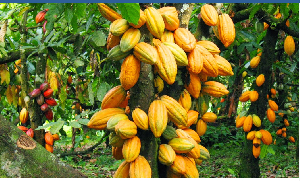 COCOBOD projected in July that cocoa production could fall by at least 16%