The Bank of Ghana (BoG) has a full department in place to regulate crypto businesses, reporting directly to the Governor. But more than nine months after Parliament passed the law creating Ghana’s crypto regime, firms still have no way to apply for a license.
The Virtual Assets Department is listed as one of the central bank’s 25 departments in its 2026 Right to Information (RTI) Manual, approved by the Governor, Dr Johnson Pandit Asiama, on September 23, 2026.
The manual tasks it “to oversee, supervise, and regulate participants in Ghana’s virtual assets ecosystem in accordance with the Virtual Asset Service Providers Act, 2025 (Act 1154),” working with the Securities and Exchange Commission (SEC).
The Bank’s organizational chart places the department in the Governor’s direct line of reporting, outside the supervisory departments that fall under the two Deputy Governors.
Yet the door to licensing remains shut. As of Friday, October 2, the Bank’s virtual assets webpage still stated that its application process and fees pages “will be available by the end of the third quarter of 2026,” a deadline that had passed on September 30.
Officials have also indicated that the Act will be fully operationalized only by 2027, as regulators finalize guidelines and policy sandboxes.
The missed deadline caps a regulatory journey marked by shifting timelines.
In 2025, shortly after taking office, Governor Asiama said crypto regulations would go live by September that year. The Bank then ordered all virtual asset service providers to register by August 15, 2025. It stressed that registration was only to identify and assess firms and was not a license to operate.
By November 2025, the Bank said more than 100 firms had registered. In a policy paper released on November 5, it announced plans to set up a Virtual Assets Regulatory Office to oversee the sector. The Bank now operates a full department, which it describes on its website as newly established.
Parliament passed the Virtual Asset Service Providers Bill on December 12, 2025, and the President assented to it on December 24. The law makes it unlawful to provide a virtual asset service without being registered, licensed or otherwise permitted under the Act.
Soon after, the Bank’s then Lead for Virtual Assets Regulation, Dr Seyram Pearl Kumah, said all implementing instruments would be out by the first quarter of 2026. She cautioned at the time that the Act did not mean crypto trading had been legalized.
Since then, regulators have moved in stages. The SEC published sandbox guidelines in January 2026 and admitted six firms into a one-year sandbox in February. On February 20, a joint BoG-SEC directive ordered all virtual asset providers to remove their advertising within 48 hours.
By July 2026, the Bank was referring to Mr Tahiru Alhassan as Head of the Virtual Assets Department. Mr Alhassan described a dual regulatory model, under which the central bank oversees payment systems and financial infrastructure while the SEC supervises investment-related activities.
In August 2026, the Bank inaugurated the Virtual Assets Coordinating Committee, required under Act 1154. It brings together the Bank of Ghana, the SEC, the Ministry of Finance, the Cyber Security Authority and the Financial Intelligence Centre. The Bank holds the chairmanship for the first two years, after which it rotates to the SEC.
The department’s elevation reflects a longer push by the Governor to keep the central bank ahead of digital finance. Dr Asiama has said that as Deputy Governor in 2016 he warned the Bank was “behind the markets.” That warning led to the creation of a Payment Systems Department, which later gave rise to the Fintech Department.
The stakes are significant. According to estimates cited in media reports, about three million Ghanaians, roughly 17 per cent of adults, already use digital assets. One industry estimate put crypto transactions in Ghana at about US$3 billion in the year to June 2024, raising concerns over the potential impact on management of the cedi.
Until the application process opens, the more than 100 firms that registered with the Bank in 2025 remain in limbo. They are barred from advertising and are waiting on a licensing window the Bank promised by the end of September.
The RTI manual does not say when licensing will begin, how many firms are expected to qualify, or what will happen to those operating without approval once the regime takes full effect.
Business News of Thursday, 8 October 2026
Source: economytimesnews.com
BoG crypto department in place, but no licenses yet
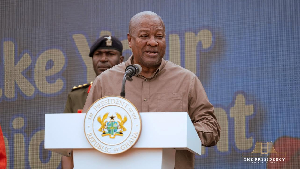
 Johnson Asiama is the Governor of tthe Bank of Ghana



Entertainment