The Minister of Health, Kwabena Mintah Akandoh, has reaffirmed the government's commitment to bringing quality healthcare closer to communities through the implementation of the Free Primary Healthcare (FPHC) initiative.
He made this revelation during a working visit to the Volta Region, where he officially launched the programme.
As part of the visit on June 12, 2026, the minister paid a courtesy call on the Asogli State and engaged traditional authorities on the objectives and expected impact of the initiative.
The traditional leadership welcomed the programme and expressed appreciation to the Minister for selecting the Volta Region as one of the regions for its launch.
Speaking on behalf of the Agbogbomefia, a representative of the Asogli State commended the minister for introducing what he described as a transformative intervention that would significantly benefit the people of the Volta Region, particularly those living in underserved and hard-to-reach communities.
Addressing stakeholders at the launch, Akandoh explained that the Free Primary Healthcare initiative is designed to complement, rather than replace, the National Health Insurance Scheme (NHIS).
A nurse jokingly asked mother to 'gift' her baby before disappearance – Assemblymember
According to him, the initiative forms part of the government's broader health sector reset agenda, aimed at shifting the country's healthcare system from one that is predominantly focused on treating illnesses to one that prioritises prevention, early detection, health promotion, and community-based care.
"Our healthcare system has become overly reliant on sick care. The Free Primary Healthcare initiative is a key component of our reset agenda to build a more comprehensive, preventive, and people-centred healthcare system that serves all Ghanaians effectively," he stated.
The minister explained that every Ghanaian with a valid national identification card would be eligible to access primary healthcare services under the programme.
However, patients requiring referral to higher levels of care would need active NHIS membership, underscoring the importance of enrolling in and maintaining membership of the scheme.
Akandoh further emphasised that the success of the programme would require the collective support of all stakeholders, including traditional authorities, local government officials, civil society organisations, the media, community leaders, and the general public.
The Volta Regional Minister, James Gunu, commended the Health Minister for prioritising the health and well-being of residents, especially those in underserved and remote communities.
He stressed that the success of the initiative would depend on strong collaboration among government institutions, health professionals, traditional authorities, community leaders, and citizens.
Representing the Director-General of the Ghana Health Service, Dr Samuel Kaba Akoriyea, the Deputy Director-General, Dr Caroline Reindorf Amissah, lauded the Minister for his leadership and commitment to strengthening healthcare delivery across the country.
"As a Service, we have already taken the lead in developing strategies to operationalise this initiative at both district and community levels. Training activities are currently ongoing across the country, with the support of the minister, to ensure successful implementation," she stated.
Dr Amissah noted that the programme would bring healthcare providers closer to communities and enable health managers to plan and deliver services based on the specific needs of the populations they serve.
She called on traditional authorities, Metropolitan, Municipal and District Chief Executives (MMDCEs), community leaders, and other stakeholders to actively support the initiative to ensure its success.
The Deputy Director-General further disclosed that the Ministry of Health had provided the Ghana Health Service with additional logistics to facilitate implementation.
"We have developed a comprehensive checklist for our health workers. As part of this initiative, our staff will be conducting home and community visits to engage residents, monitor key health indicators, and provide preventive health services. We therefore encourage communities to cooperate fully with our health workers as we work together to improve health outcomes," she said.
As part of the regional tour, Akandoh conducted mini-launches and inspection visits to several health facilities, including the Kpetoe Health Centre, Agortime-Akpokorpe CHPS Compound, Ave-Dakpa Health Centre, and Dzodze, where he inspected a health post that is currently under construction and nearing completion.
The minister also handed over essential logistics to support the implementation of the Free Primary Healthcare initiative.
These included tricycles, motorbikes, delivery beds, home-visit kits equipped with basic healthcare tools, equipment for Community Health Officers and other non-drug consumables required for service delivery.
The visits provided an opportunity for health officials to engage directly with frontline healthcare workers and community members while assessing ongoing infrastructure projects aimed at strengthening healthcare delivery across the region.
The minister was accompanied by a high-level delegation comprising Dr Caroline Reindorf Amissah, Deputy Director-General of the Ghana Health Service; Dr Senanu Kwaku Dzokoto, Deputy Chief Executive Officer of the National Health Insurance Authority (NHIA) in charge of Operations; Dr Peter Yeboah, Executive Director of the Christian Health Association of Ghana (CHAG); Dr Lawrence Ofori-Boadu, Director of the Institutional Care Division of the Ghana Health Service and Dr Atsu Dodor, Volta Regional Director of Health Services.
The visit forms part of the government's determination to expand access to quality healthcare and ensure that no Ghanaian is left behind, regardless of location or socioeconomic status.
Engineers' body calls for mandatory verification of foundations before concrete works
Health News of Saturday, 13 June 2026
Source: www.ghanaweb.com
Health Minister launches free primary healthcare initiative in Volta Region
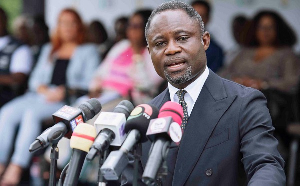 Minister of Health, Kwabena Mintah Akandoh