University of Media, Arts and Communication (UniMAC-IJ) student Jennifer Frimpong-Wiredu has been named Best Student Journalist of the Year at the 30th Ghana Journalists Association (GJA) Media Awards for her documentary exploring the history and origins of the word 'trotro'.
Frimpong-Wiredu earned the recognition with her feature, Etymology of Trotro, which examined the historical roots of the popular Ghanaian transport term and its place in the country's everyday culture.
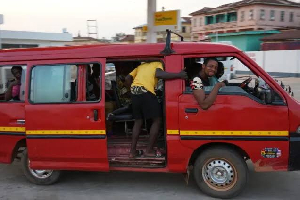
The documentary, broadcast on Ghana Broadcasting Corporation's (GBC) Akan News, took viewers beyond the familiar sight of commercial minibuses on Ghana's roads to explore how the word 'trotro' became part of the country's transport vocabulary.
It traced the name to the old 'tro' fare, associated with threepence during the colonial era, when passengers paid a small amount to travel on commercial vehicles.
Through interviews with drivers, passengers and cultural historian Kwame Agyenim Boateng of the Manhyia Palace in Kumasi, Jennifer examined the historical and social significance of a transport system that millions of Ghanaians depend on daily.
The documentary also explored the realities of commercial driving, including the difficulties drivers encounter on the roads, their interactions with passengers and the economic importance of the transport business.
One of the drivers interviewed, Michael Kwarteng, spoke about the difficulties commercial drivers face at police checkpoints, particularly on long-distance routes.
He complained that even drivers with valid vehicle documents were sometimes subjected to repeated demands for money by officers.
"The police officers on the highway keep worrying us as if we carry contraband in our vehicles. Meanwhile, the car has every legal document and item intact. Yet, police officers will still take money from us," he said.
Another driver, Raymond Mensah, who said he had been in the profession for more than 20 years, spoke about how commercial driving had provided him with a livelihood.
He explained that he entered the profession after completing school, following the example of his uncle, who had also worked as a commercial driver.
Vincent Amoah, another interviewee, described trotro operations as a worthwhile business, revealing that his years in the transport industry had enabled him to build his own house.
"I have benefited from driving trotro — I have built my own house from my trotro business," he said.
The documentary also captured the experiences of passengers, who spoke candidly about the advantages and frustrations of relying on commercial transport.
While some described trotros as an affordable alternative to owning private vehicles, others complained about overcrowding, uncomfortable journeys, long queues and disagreements with conductors over change.
A passenger, Delight Tetteh, particularly complained about the frequent disagreements between passengers and mates over change.
Cultural historian Kwame Agyenim Boateng provided further historical context, explaining how the old currency and transport fare contributed to the development of the name.
He noted that Ghana had used several forms of currency before the introduction of the cedi, including Simporwa, Simporwa-ba, Kaperɛ, Kaperɛ-ba and Darmaa.
According to him, the 'tro' was among the historical units of currency used in determining transport fares.
"History has it that in those days, regardless of where you would alight as a passenger, you were charged the 'tro' amount," he explained.
He added that the expression eventually became associated with the commercial vehicles and developed into the familiar name 'trotro'.
Jennifer's award-winning work therefore combines historical research with human-interest reporting, using an everyday Ghanaian experience to tell a broader story about the country's cultural identity and transport history.
The award was presented at the 30th GJA Media Awards held on Saturday, November 7, 2026, at the Palms Convention Centre of the La Palm Royal Beach Hotel in Accra.
The ceremony brought together prominent personalities from government, Parliament, the judiciary, traditional leadership, the diplomatic community and the media.
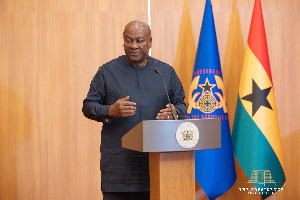
Among the dignitaries present were President John Dramani Mahama, Speaker of Parliament Alban Sumana Kingsford Bagbin, Chief Justice Justice Paul Baffoe-Bonnie, Bank of Ghana Governor Dr Johnson Pandit Asiama, his deputy Matilda Asante Asiedu, Inspector-General of Police Christian Tetteh Yohuno, GJA President Albert Kwabena Dwumfour and UniMAC Chancellor Dr Ernest Ofori Sarpong.
The Ga Mantse, King Tackie Teiko Tsuru II, was also among the traditional authorities at the ceremony.
The 30th edition of the awards was held under the theme, "Celebrating Excellence, Advancing Media Freedom and Combating Hate Speech in the Digital Age."
Jennifer Frimpong-Wiredu is pursuing a Bachelor of Communication Studies degree, specialising in Public Relations, at UniMAC-IJ.
Her recognition adds to the university's contribution to journalism training and underscores the importance of research-driven storytelling in documenting Ghanaian society, its history and everyday experiences.
EA
General News of Sunday, 8 November 2026
Source: www.ghanaweb.com
UniMAC-IJ's Jennifer Frimpong-Wiredu wins GJA Best Student Journalist Award
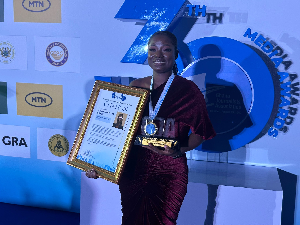 Photo of Jennifer Frimpong-Wiredu holding her citation and award plaque