The government has outlined a $270 million investment in artificial intelligence (AI), including plans to develop a national language model that will enable public institutions to use the technology without exposing sensitive government information to foreign platforms.
Minister for Communication, Digital Technology and Innovations, Samuel Nartey George, said $250 million of the proposed investment would go into AI infrastructure and computing capacity, while $20 million would provide seed funding for an AI fund.
Oil prices rise above $110 as fresh attacks hit Saudi Arabia
Speaking at the Digital Economy Forum on AI and the Ghana Economy on Wednesday, October 21, 2026, George said the initiative was partly driven by concerns about government analysts using foreign AI platforms to process confidential documents.
He said he had observed instances in which classified government material was being entered into platforms such as ChatGPT and Claude by analysts working in ministers’ offices, raising concerns about the security of state information.
“That, for me, represents a critical national risk because memos, government material, critical government-sensitive data is being fed into these systems by analysts sitting in ministers’ offices to process that data,” he said.
Sam George also questioned the effectiveness of Ghana’s data residency law if public institutions continued to rely on foreign AI models to process sensitive information.
“Now we have a residency law that we’ve passed, but it’s useless if the government system itself is using a foreign AI model to do processing,” he said.
The minister acknowledged that Ghana’s proposed model would not initially match the performance of established platforms such as ChatGPT and Claude, which have been trained on enormous volumes of data. However, he said its capabilities could improve as it was used and trained over time.
“At start, will it be as effective as Claude and ChatGPT? Definitely not,” Mr George said. “But then the more you use it and the more you teach it, the more the machines learn, the better the system will get,” he added.
He said the development of the national model was part of efforts to address legitimate concerns about AI adoption and ensure that public institutions could use the technology without compromising sensitive information.
“So basically, I see all the questions that are being raised, very legitimate questions, very legitimate issues, but I believe that we are on the right track to resolving all of those issues,” he said.
The proposed investment would support the infrastructure and computing resources required to advance Ghana’s AI ambitions, alongside seed funding for the AI fund.
However, the minister did not provide a detailed implementation timeline for the national model or specify when it would become available for use across government institutions.
ANAS/MA
2026 FT Africa Summit | President Mahama on headwinds that should shape Africa’s economic future
Business News of Thursday, 22 October 2026
Source: www.ghanaweb.com
Ghana to invest $270 million in AI infrastructure, national language model – Sam George
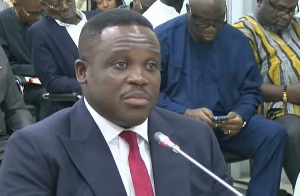 Sam George is the Minister for Communication, Digital Technology and Innovation