The University of Mines and Technology (UMaT), Tarkwa, through the newly established Ibrahim Mahama Institute for Sustainable Processing of Precious, Critical and Green Minerals (IMI-SPPCGM), participated in the second edition of the African Minerals Policy Forum (AMPF), held under the Mining in Motion Summit 2026 from 19 to 21 October 2026 in Accra.
Organised by the Ashanti Green Initiative (AGI) in collaboration with the Government of Ghana through the Ministry of Lands and Natural Resources, the summit was held under the theme “One Continent, One Policy – Aligning Africa’s Mineral Future.” The event brought together policymakers, government officials, mining industry executives, investors, researchers and other stakeholders to deliberate on the future of Africa’s mineral resources.
The first and second days of the summit took place at the Destiny Arena, while the final day was held at the Mövenpick Ambassador Hotel, Accra.
President Mahama calls for greater value addition to Africa’s mineral resources
The summit commenced with an opening ceremony featuring welcome remarks from the convener, addresses by distinguished dignitaries and a keynote address by the President of the Republic of Ghana, His Excellency John Dramani Mahama.
In his address, President Mahama emphasised the need for African countries to move beyond the exportation of raw minerals and prioritise domestic processing, value addition and the development of mineral-based industries. He underscored the importance of stronger regional cooperation, responsible mineral governance and strategic investment in processing infrastructure to ensure that Africa derives greater economic benefits from its mineral wealth.
The President’s message reinforced the importance of research, technological innovation and skills development in building a competitive and sustainable minerals industry. These priorities align with UMaT’s expertise in mining, mineral processing and related fields, as well as the mandate of IMI-SPPCGM to advance sustainable processing and value addition.
UMaT delegation advances institutional engagement
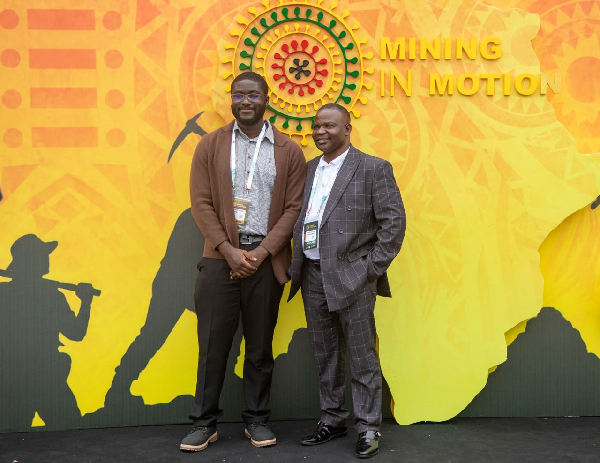
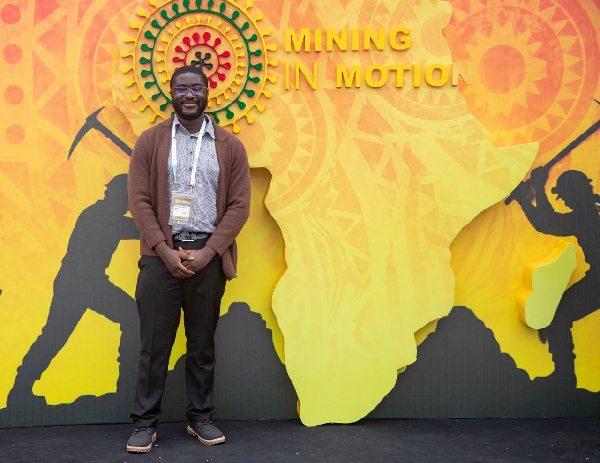
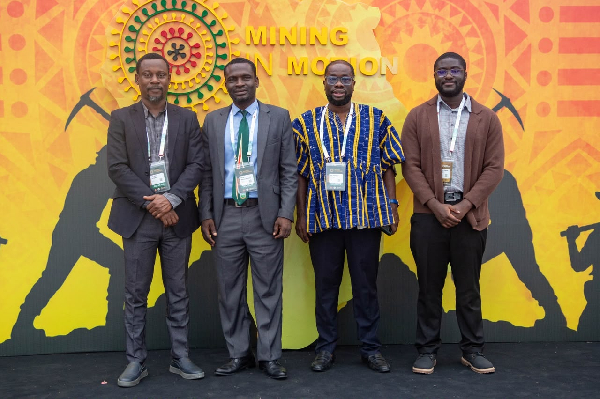
UMaT was represented by Professor Eric Broni-Bediako, Director of IMI-SPPCGM; Dr Akyini Tetteh, Deputy Director; Dr Kojo Twum Konadu, Head of the Department of Minerals Engineering; and Mr Seth Ayekple, Institute Registrar.
The participation of the Institute’s principal officers was particularly significant as IMI-SPPCGM continues to establish its institutional identity, operational structures, strategic partnerships and external networks.
The summit provided an important platform for the Institute to engage stakeholders across the African minerals ecosystem, explore collaborative research opportunities, strengthen industry relationships and identify potential sources of technical and financial support for its programmes.
Through these engagements, the Institute seeks to position itself as a strategic partner in addressing challenges relating to mineral recovery, sustainable processing, environmental responsibility and the development of local mineral value chains.
UMaT contributes to discussions on maximising value from Africa’s gold
A major highlight of the summit was a panel discussion titled “Capturing More Value from Africa’s Gold: Refining, Responsible Purchasing and Global Market Access.”
During the discussion, Dr Kojo Twum Konadu, Head of the Department of Minerals Engineering, highlighted the importance of research and technological innovation in improving gold recovery from refractory and carbonaceous ores.
He cited an initiative supporting postgraduate research, including doctoral studies, aimed at improving gold recovery from carbonaceous gold ore. According to the figures presented during the discussion, recovery had improved from approximately 20 per cent to 91 per cent, demonstrating the potential contribution of research and advanced processing techniques to more efficient mineral extraction.
Dr Konadu also stressed the need for sustained investment in mineral resource identification and characterisation, particularly in the artisanal and small-scale mining sector. He highlighted the potential of regional laboratory and technical service hubs to improve extraction and smelting performance and support the development of standard operating procedures for responsible gold purchasing and processing.
The discussion further underscored the importance of developing local supply chains to retain more mining-related revenue within Ghana. Local sourcing of steel balls by Newmont was cited as an example of how domestic procurement can support local industries. Similar opportunities may exist for locally supplied rubber products, industrial chemicals, limestone-derived materials, paper, food and other inputs required by mining operations.
On gold processing technologies, the panel considered both cyanide-based and non-cyanide leaching approaches, highlighting opportunities for research into efficient, environmentally responsible and economically viable processing methods.
These issues present important opportunities for IMI-SPPCGM and UMaT to contribute through applied research, postgraduate training, technical services and industry collaboration.
Strengthening partnerships for sustainable mineral development
Beyond the technical panel, plenary sessions and fireside chats brought together prominent dignitaries, investors, policymakers, government officials and industry stakeholders to discuss the policies, investments and innovations needed to transform Africa’s mineral sector.
The discussions reinforced the importance of collaboration between universities, mining companies, governments and development partners in advancing mineral beneficiation, responsible mining, technology transfer and industrial development.
For IMI-SPPCGM, these engagements provided valuable insights into potential areas of collaboration in research, training, policy formulation and sustainable mineral processing. They also highlighted the need for research institutions to develop practical, industry-oriented solutions that respond to the evolving needs of the minerals sector.
As a newly established institute, IMI-SPPCGM is committed to building strategic relationships that will support its research agenda, strengthen its technical capabilities and contribute to UMaT’s broader mission of advancing mining education, research and innovation.
Director outlines the way forward
Professor Eric Broni-Bediako, Director of IMI-SPPCGM, emphasised the importance of translating the opportunities identified at the summit into practical and sustainable institutional outcomes.
He noted that the Institute’s long-term success would depend on strong partnerships with industry, government, research institutions and development partners, supported by relevant research, innovation and capacity development.
The Institute intends to pursue collaborative research, strengthen postgraduate training, explore opportunities for technical and financial support, and develop partnerships that address critical challenges in mineral processing and value addition.
Priority areas include improving mineral recovery, promoting environmentally responsible processing technologies, supporting local supply chains and advancing the sustainable utilisation of precious, critical and green minerals.
The Director’s strategic outlook reflects the Institute’s ambition to become a recognised centre for research, innovation and collaboration in sustainable mineral processing, contributing to Ghana’s mineral industrialisation agenda and Africa’s broader development aspirations.
Looking ahead
UMaT’s participation in the Mining in Motion Summit 2026 marks an important step in strengthening the visibility and strategic positioning of IMI-SPPCGM within Ghana’s and Africa’s minerals ecosystem.
The Institute will seek to build on the engagements initiated during the summit by pursuing collaborative research, developing industry-oriented proposals, strengthening stakeholder relationships and exploring opportunities for postgraduate training and technical cooperation.
These efforts are expected to support the Institute’s institutional development while enhancing UMaT’s contribution to sustainable mineral processing, responsible resource utilisation and the development of competitive local and regional mineral value chains.
UMaT, particularly IMI-SPPCGM, expresses its sincere appreciation to the Ashanti Green Initiative and the Government of Ghana, through the Ministry of Lands and Natural Resources, for providing the platform for this important engagement.
The University looks forward to sustained collaboration with stakeholders to advance research, innovation and sustainable development across Africa’s minerals sector.
Business News of Thursday, 22 October 2026
Source: UMAT
UMaT pushes for stronger mining partnerships at Mining in Motion 2026
 UMaT delegates at the Mining in Motion 2026 Summit.