The Divisional Chief of Manya Aklomuase in the Manya Krobo Traditional Area of the Eastern Region, Okpatakpla Sasraku IV, has called for stronger cooperation among traditional authorities and communities across the Krobo and Dangme areas to promote peace, resolve disputes and accelerate development.
He said closer collaboration among neighbouring divisional areas would help strengthen relationships, encourage the sharing of resources and expertise, and advance the collective interests of the people.
Okpatakpla Sasraku IV made the call when he addressed the 2026 Manya Divisional Ngmayem Mini Durbar at the Matse Israel School Park in Aklomuase in the Eastern Region on Tuesday, October 27.
The celebration was held under the theme, “Unity through Heritage: Building a Stronger Manya Aklomuase.”
According to the chief, the festival provided an opportunity for the people to reflect on their shared cultural heritage and renew their commitment to peace, unity and community development.
He stressed that the future of Manya Aklomuase depended on the willingness of residents and traditional authorities to work together towards common goals.
“Our relationship with our neighbouring divisional areas and the wider Krobo and Dangme communities should be built on mutual respect, cooperation and a shared commitment to peace and development,” he said.
He added that communities could achieve more by combining their resources, sharing knowledge and placing the collective interest above narrow considerations.
Call for collective development
The chief also urged chiefs, queen mothers, elders, professionals, farmers, traders and young people to contribute to initiatives aimed at improving living conditions in their communities.
He said development required collective responsibility, noting that no single individual or institution could meet all the needs of the people.
He encouraged successful indigenes living in Ghana and abroad to maintain strong connections with their communities and support initiatives in areas such as education, sanitation, public infrastructure and youth development.
Okpatakpla Sasraku IV further appealed to the government, Members of Parliament and local authorities to give sustained attention to road infrastructure in Lower and Upper Manya Krobo.
He said improved roads were essential to facilitating commerce, supporting agricultural production, improving access to schools and health facilities, and creating better conditions for local economic activity.
He particularly called for the expeditious completion of the Somanya–Odumase–Kpong highway, expressing appreciation that work on the project had resumed after being abandoned for some time.
Preserving shared cultural heritage
The divisional chief emphasised that cultural heritage remained an important foundation for unity among the Krobo people and the wider Dangme communities.
He called on traditional authorities, families, teachers and cultural groups to intensify efforts to preserve the Krobo language, customs, history and traditional institutions for future generations.
He said young people needed to understand the significance of their cultural identity even as they embraced education, technology and opportunities in the modern world.
He also commended the Manya Klo Ngmayem Festival Planning Committee for introducing a mock durbar under the auspices of the Konor to enable younger generations to learn about traditional leadership and demonstrate their understanding of customary practices.
Youth urged to promote peace
Okpatakpla Sasraku IV urged the youth to contribute to peaceful coexistence by rejecting violence and unlawful conduct and resolving disagreements through dialogue.
He encouraged them to pursue education, acquire practical skills and embrace innovation to improve their circumstances and contribute to community development.
He also called on traditional leaders to demonstrate fairness, sound judgement and dedication to the welfare of their people.
The chief said the Ngmayem celebration should go beyond thanksgiving and cultural festivities to inspire practical efforts towards strengthening relationships, resolving disputes and improving the lives of residents.
He expressed appreciation to the chiefs, queen mothers, elders, festival planning committee, sponsors, youth, volunteers and other stakeholders who contributed to the organisation of the durbar.
He said the success of the celebration would ultimately be measured by the people's renewed commitment to unity, cultural preservation and the development of their communities.
Regional News of Tuesday, 27 October 2026
Source: www.ghanaweb.com
Chief of Manya Aklomuase calls for stronger unity among Krobo, Dangme communities
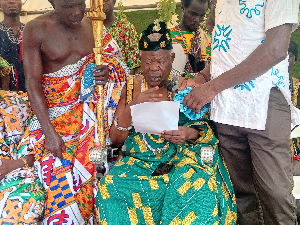 Divisional Chief of Manya Aklomuase, Okpatakpla Sasraku IV