The Ghana TVET Service has signed a landmark strategic partnership with the United Nations Educational, Scientific and Cultural Organization (UNESCO), KPMG and Microsoft under the AI EmpowerED initiative to accelerate the integration of artificial intelligence and digital innovation across Ghana’s Technical and Vocational Education and Training system.
At the centre of this effort is the training of at least 100,000 TVET facilitators in artificial intelligence and digital competencies to deliver future-ready skills at scale. The historic partnership was signed at the Ghana TVET Service Headquarters.
Ghana’s TVET facilitators remain the single strongest determinant of training quality, yet the competencies they are equipped with were designed for a largely analogue system.
That system has changed. Training environments are becoming more complex, with workshops, laboratories and equipment now driven by evolving technologies that require a level of familiarity many facilitators have not been systematically supported to develop.
At the same time, the demands on the system are increasing. Institutions are expected to train more learners, extend access to underserved communities and respond to a labor market that is being reshaped by automation and intelligent systems. Artificial intelligence is no longer a distant concept.
It has surfaced in both the workplace and the classroom, influencing how lessons are designed, delivered and assessed.
There are also real risks of unethical AI use. Plagiarism, misinformation, algorithmic bias and the mishandling of learner data all follow AI into the classroom. An informed facilitator is the first line of defence and the best model of responsible use for the next generation of graduates.
The agreement establishes a coordinated national framework to strengthen the capacity of Ghana’s TVET ecosystem to deliver future-ready skills while equipping at least 100,000 TVET facilitators with artificial intelligence and digital competencies, strengthening their ability to teach effectively in modern environments, expand access through digital delivery and ensure responsible use of emerging technologies.
By building this capacity at scale, the initiative is expected to significantly improve the quality, relevance and reach of TVET delivery across Ghana.
Under the partnership, the Service will lead national implementation, driving institutional readiness and embedding AI-enabled teaching and learning approaches within training delivery.
The initiative will support curriculum enhancement, strengthen instructor capacity and facilitate the deployment of digital tools across selected institutions.
UNESCO will provide policy leadership and technical oversight to ensure alignment with international standards and best practices.
KPMG will support programme design and systems strengthening to enhance efficiency, scalability and measurable impact, while Microsoft will contribute digital infrastructure and AI-powered solutions to support teaching, learning and institutional performance.
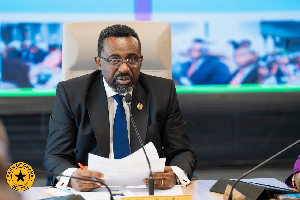
Speaking at the signing ceremony, the Director-General of the Ghana TVET Service, Engr Dr Eric Kofi Adzroe, underscored the strategic importance of the initiative, noting that
"Technical and vocational education cannot remain static in a rapidly changing world. This partnership represents a clear shift towards a system that is aligned with industry, powered by technology and focused on outcomes.
By strengthening the capacity of our facilitators, we are building a workforce that is equipped not just for today, but for where the global economy is heading." says Dr Adzroe.
The Deputy Director-General in charge of Management Services, Abdul Fatah Maigah Mahama, Esq, further highlighted the long-term value of the collaboration by adding that
“Artificial intelligence will shape how our young people learn and work, whether we prepare for it or not. Our responsibility is to ensure it enters our classrooms with our values intact by equipping facilitators to use it with integrity, question its outputs, protect learner data and guard against biases that come with artificial intelligence.
"This is about building sound judgement in how the technology is used in our classrooms and in the graduates, we produce," Fatah Mahama said.
Beyond institutional strengthening, the partnership is expected to expand opportunities for youth employment, entrepreneurship and innovation by ensuring that graduates are equipped with relevant, future-facing skills.
It also contributes to Ghana’s broader agenda of building a resilient and digitally capable workforce to support industrialisation and inclusive economic growth.
Implementation of the AI EmpowerED initiative will be undertaken in collaboration with government agencies, industry partners and development organisations to ensure coordination, sustainability and nationwide impact.
This agreement marks a significant step in the ongoing transformation of Ghana’s TVET sector, translating policy direction into measurable outcomes.

Regional News of Tuesday, 22 September 2026
Source: gbcghanaonline.com
Ghana TVET Service, UNESCO, KPMG and Microsoft sign MoU to train 100,000 TVET facilitators
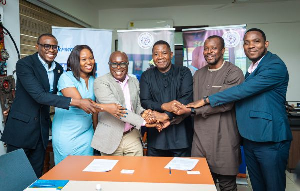 Some of the stakeholders at the event