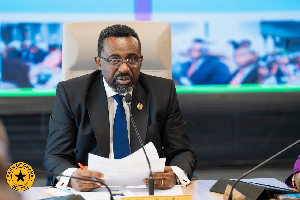
The Commission on Human Rights and Administrative Justice (CHRAJ) has called for a comprehensive approach to tackling gender-based violence (GBV), stressing that addressing individual cases alone would not resolve the underlying causes of the problem.
Deputy Commissioner of CHRAJ, Mercy Larbi, said ending GBV required a fundamental transformation of harmful cultural practices, entrenched gender stereotypes and structural inequalities that continued to expose vulnerable groups to violence and discrimination.
She made the call in Accra on Tuesday, September 22, 2026, when she delivered the opening remarks at the Human Rights NGO Forum Coordinating Meeting.
The two-day meeting, organised under the project titled “Scaling Up Access to Rights-Based Integrated Gender-Based Violence Services,” seeks to strengthen collaboration among civil society organisations and other stakeholders in preventing and responding to GBV.
Larbi said GBV remained one of the most persistent human rights violations, with its roots in discriminatory social norms, unequal power relations and systemic institutional gaps.
“Addressing GBV demands far more than isolated responses to individual cases; it requires a fundamental transformation of harmful cultural practices, deep-seated gender stereotypes, and structural inequalities,” she said.
Alan Kyerematen cautions against 'premature' celebration of economic gains
Larbi acknowledged that while the State had the primary responsibility to respect, protect and fulfil the human rights of every individual, government institutions alone could not eradicate GBV.
She described non-governmental organisations (NGOs) and civil society organisations as indispensable partners in the fight against gender-based violence, particularly because of their presence within communities.
According to her, such organisations served as immediate responders, community educators and advocates, while also supporting survivors, documenting human rights violations and holding institutions accountable.
She urged participants to use the forum to strengthen collaboration and develop practical strategies that would improve referral pathways, community engagement and the monitoring of human rights violations.
Larbi said the primary objective of the forum was to strengthen the collective capacity of participating organisations to apply a rigorous, human rights-based and gender-responsive approach to GBV prevention and response.
She expressed CHRAJ's appreciation to the United Nations Population Fund (UNFPA) for its support towards the project and the NGO Forum meeting.
AM
GBA president 'attacks' Chief Justice Baffoe-Bonnie at 2026 Bar Conference Over SOE Comments
Inside Zonda Tec’s Ultra-Modern Car Assembly Plant in Ghana
Regional News of Tuesday, 22 September 2026
Source: www.ghanaweb.com
CHRAJ calls for structural approach to tackling gender-based violence
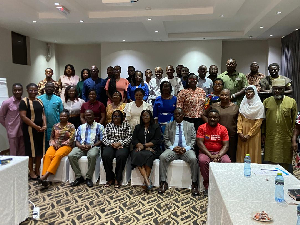 Some of the stakeholders at the event
Sports