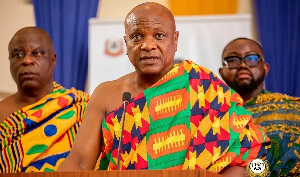
The Young and Safe Project has directly impacted more than 10,000 young people in the Ho Municipality and has recorded a 40% increase in behavioural change among students who participated in its school club model, according to Project Coordinator Joshua Tetteh Ayayi.
The project, funded by Fondation Botnar and managed by Ecorys UK under the Healthy Cities for Adolescents programme, is implemented by a consortium led by Node Eight, with LoveAid Foundation, the Ghana Education Service and the Ho Municipal Assembly, and seeks to create a youth-friendly city where young people's voices are incorporated into local governance and policies while promoting their overall well-being.
Ayayi disclosed the achievements during a stakeholder engagement organised to validate documents establishing a Youth Council for the Ho Municipality. He said the project was implemented from April 2023 to February 2026 and provided young people with training, safe spaces, leadership opportunities and platforms to participate in community development.
Among the key interventions were Health and Well-being Bootcamps focusing on sexual and reproductive health and rights, mental health and cyber hygiene. The project also organised virtual reality and robotics training, Design Thinking Bootcamps, Youth Leadership and Advocacy Training, youth festivals and activities to rehabilitate the Ho Children's Park.
According to him, the project has had a lot of activities over the 3 years of its implementation and “in terms of direct impact, we have a total of 10,000-plus young people who have been directly impacted through the different activities," Ayayi said.
He explained that the project's monitoring, evaluation and learning system played a significant role in identifying the need for school clubs to sustain the impact of the training programmes.
He noted that the project initially only had bootcamps, with monitoring conducted shortly after training and again after six months. However, data showed that many students often forgot some of the lessons within two to five weeks after the training.
The project therefore piloted Young and Safe Clubs at Tanyigbe and Taviefe Senior High Schools respectively during its second year. After six months, monitoring officers recorded a 40% increase in behavioural change among students involved in the clubs compared with those who had only participated in the bootcamps.
Ayayi said the findings demonstrated that continuous peer education could significantly improve the sustainability of the programme.
"The data revealed that after training, between two and five weeks, some young people had forgotten what they had learnt. When we introduced the clubs and went back after six months, we found a 40% increase in behavioural change in the two schools," he explained.
He said the clubs would therefore become a major component of the project's extension phase, with the Ghana Education Service taking the lead and LoveAid Foundation providing support.
The project is also transitioning its governance component into a Youth Council, which is expected to provide young people with a formal platform to contribute to development planning and policies within the municipality.
Ayayi said the Youth Council would enable young people to engage the Municipal Assembly on issues affecting them and collaborate with civil society organisations and other institutions to implement initiatives in areas such as sanitation, health and youth development.
Ho Municipal Director of the National Youth Authority (NYA), Mr Charles Kwesi Gomenu, welcomed the proposed Youth Council, describing it as an important step towards strengthening youth participation in local governance.
He said the council would complement government efforts to establish Youth Councils at national, regional and district levels and could make Ho a pioneer in creating a formal municipal youth council.
"The youth are agents of change. The future belongs to young people, but whatever will happen in the future must be worked towards now," Mr Gomenu said.
He, however, urged young people who would serve on the council to conduct themselves responsibly and become role models in their communities.
Mamaga Mexasukpa III, Queen Mother of Akoefe Avenui, also commended the project and appealed to traditional leaders and other stakeholders to support efforts to educate young people.
She, however, lamented the unwillingness of some young people to learn and be transformed by the knowledge being imparted to them.
The Queen Mother noted that traditional leaders are always ready to collaborate with the consortium and other stakeholders to educate and impact the youth in the municipality.
Ayayi said the next phase would focus on sustaining the gains made and connecting the project to the wider ecosystem of youth development initiatives.
"We do not want just a Young and Safe project impact. We want to connect Young and Safe to other interventions and organisations so that the gains can be sustained," he said.
Other interventions included the Y Radio show, which provided information and discussions on youth-related issues, as well as the Jesi Young and Safe Scholarship, which equipped young people with skills to navigate opportunities and challenges as they transitioned into adulthood.
Regional News of Wednesday, 2 September 2026
Source: Desmond Tinana, Contributor
Young and Safe impacts 10,000 youth, records 40% behavioural change in Ho
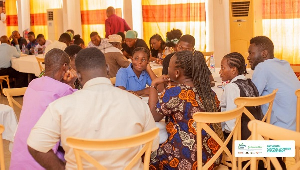 A picture of some beneficiaries of the Young and Safe project