For many caregivers running small businesses in rural areas, keeping track of daily sales, expenses and profits has been a challenge, not necessarily because they cannot run a business, but because some never had the opportunity to acquire the basic literacy and numeracy skills needed to maintain written records.
Recognising this challenge, Friends of Adaklu (FOA), through the Sea Works At Night Project, organised a three-month Adult Literacy and Numeracy Training programme for caregivers in Agavedzi, Salakorpe and Amutinu.
The training was designed to strengthen caregivers’ ability to read, write and perform basic calculations, with particular attention to how these skills can be applied to their businesses and household financial management.
The eight-month SEZ-Germany-funded project, implemented through Tectonic Movement, is a direct response to the devastating tidal waves that have affected the coastal communities of Agavedzi, Salakorpe and Amutinu.
The training focused on practical literacy and numeracy skills that caregivers could immediately apply in their everyday lives.
Participants were supported to write and sign their names, identify and read basic words and information, count money, perform simple calculations and keep basic business records.
For caregivers operating small businesses, these skills are particularly important. Being able to write down daily sales and expenses allows a business owner to have a clearer picture of how much money is coming into the business, what is being spent and what remains available for reinvestment.
The training therefore connected classroom learning directly to livelihood management. Caregivers were introduced to simple ways of recording sales, expenses and income, helping them move towards more organised management of their businesses.
According to Roberta Donkor, Project Manager of the Sea Works At Night Project, the importance of the training goes beyond helping caregivers read and write.
She explained that some caregivers did not have the opportunity to attend school while growing up and, as a result, may struggle to identify words, write information or perform basic calculations. These limitations can become particularly challenging when they operate businesses that require them to keep track of transactions.
Roberta noted that a caregiver may be capable of running a business but still find it difficult to write down the day’s sales, record expenses, identify written information or calculate basic figures.
Strengthening these basic skills can therefore make caregivers more independent in managing their businesses. She further said the skills could help caregivers support their children with homework and understand their performance when school results are given to them.
According to her, some caregivers are not even able to identify whether their children have obtained pass marks.
“Adult literacy is important because some of our caregivers did not have the opportunity to go to school. When they can identify words, write and do simple calculations, they can begin to keep proper records of their businesses without always depending on someone else.”
She further emphasised that proper record-keeping can help caregivers understand how their businesses are performing and make better decisions about their income and expenditure.
Peace Agbedzi, a caregiver from Agavedzi and a beneficiary of the training, said she did not have the opportunity to attend school and, as a result, found it difficult to keep the business records required by the project.
“I am grateful that the project identified that some of us could not read or write and introduced the Adult Literacy and Numeracy Training to give us the opportunity to learn the basic skills needed to manage our businesses effectively,” she said.
She noted that one thing she particularly liked about the training was that it was conducted in the local language, Ewe, which made the lessons easier to understand, relatable and more practical for participants.
Regional News of Friday, 28 August 2026
Source: Desmond Tinana, Contributor
FOA equips 50 tidal wave victims with literacy, numeracy skills
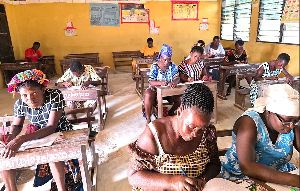 The training was designed to strengthen caregivers’ ability to read, write and numeracy skills