Correspondence from the Eastern Region
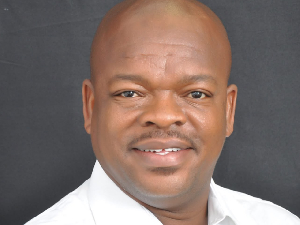
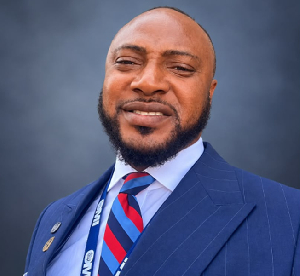
The National Chairman of Friends of Bawumia “08”, Charles Owusu Juanah, has congratulated Vice President Mahamudu Bawumia on what he described as a historic victory in the party’s recent presidential election while outlining an ambitious grassroots mobilisation strategy aimed at securing electoral victory in 2028.
In a statement, Juanah said the outcome of the presidential contest reaffirmed the democratic traditions of the New Patriotic Party (NPP) and its commitment to the rule of law and the will of the Ghanaian people.
According to him, the victory represents more than a personal achievement for Dr Bawumia, describing it as a reaffirmation of the party’s longstanding record of policy innovation and people-centred governance.
“This historic mandate is not merely a personal triumph for Dr Bawumia; it is a reaffirmation of the NPP’s enduring tradition of competent leadership, bold policy innovation, and people-centred governance,” Juanah stated.
He noted that Friends of Bawumia “08” would play a strategic role in strengthening grassroots mobilisation ahead of the 2028 general elections through a nationwide organisational structure designed to complement the party’s official campaign machinery.
Nationwide mobilisation strategy
Juanah revealed that the group intends to establish a network of campaign operatives in all electoral areas across the country.
Ghana currently has about 6,272 electoral areas as demarcated by the Electoral Commission of Ghana. Under the proposed strategy, Friends of Bawumia “08” plans to recruit ten members in each electoral area.
If successfully implemented, the plan will create a network of over 62,000 grassroots campaigners nationwide tasked with voter engagement, mobilisation, and campaign messaging.
He said these operatives would be trained in voter outreach, equipped with campaign logistics, and supplied with accurate information to drive issue-based and respectful campaigning across communities.
“Our vision is to build an effective grassroots campaign supported with logistics and guided by the right campaign information in every electoral area across the country,” he explained.
Organisational structure
The chairman said the movement would operate under a structured hierarchy comprising electoral area teams, constituency coordinating teams, regional campaign management committees, and a national leadership secretariat.
According to him, the system will ensure clear reporting lines, accountability, and strategic coordination with the NPP’s national campaign structure.
He emphasised that the model is intended to enhance rapid mobilisation and strengthen campaign efficiency across the country.
Bawumia’s leadership credentials
Juanah described Dr. Bawumia as a leader with strong intellectual capacity, economic reform expertise, and a reputation for disciplined public service.
He credited the Vice President with playing a key role in Ghana’s digital transformation agenda, citing initiatives such as the national digital property address system, the Ghana Card integration programme, mobile money interoperability, and the paperless port system.
According to him, these reforms have contributed to improving transparency, reducing bureaucratic inefficiencies, and strengthening revenue mobilisation in the country.
He added that Dr. Bawumia’s leadership combines technocratic competence with humility and integrity, qualities he believes make him well positioned to lead Ghana’s next phase of development.
NPP’s social intervention record
The Friends of Bawumia “08” chairman also highlighted what he described as the NPP’s track record of implementing major social intervention programmes aimed at improving the welfare of ordinary Ghanaians.
He referenced policies introduced under former President John Agyekum Kufuor, including the National Health Insurance Scheme (NHIS), the capitation grant for basic education, the Ghana School Feeding Programme, and the Livelihood Empowerment Against Poverty (LEAP) programme.
Juanah further cited initiatives implemented under President Nana Addo Dankwa Akufo-Addo and Vice President Bawumia, such as the Free Senior High School policy, One District One Factory programme, Planting for Food and Jobs initiative, and the Agenda 111 Hospitals Project.
He said these interventions demonstrate the party’s commitment to improving healthcare, education, employment opportunities, and economic development.
Lessons from the 2024 elections
Juanah acknowledged that the party’s defeat in the 2024 general elections provides important lessons as the NPP prepares for future electoral contests.
Among the key factors he cited were voter apathy among the party’s traditional support base, internal divisions within party structures, and dissatisfaction among some grassroots members.
According to him, reduced turnout among core supporters significantly weakened the party’s electoral performance in several constituencies.
He stressed that rebuilding trust between party leadership and grassroots members would be critical to reversing the trend.
“The experience of the 2024 elections demonstrates that the greatest threat to a political party is not always the opposition, but internal disunity,” he said.
Road to 2028
Looking ahead, Juanah called for reconciliation, stronger grassroots engagement, and inclusive leadership within the party.
He said Friends of Bawumia “08” would focus on strengthening voter education, expanding support among young people and professionals, and promoting issue-based political campaigning.
“With renewed unity and strategic mobilisation, the NPP can confidently look forward to reclaiming victory in 2028,” he said.
Juanah pledged that the organisation would work closely with the party’s structures to build what he described as a disciplined, data-driven movement capable of supporting the NPP’s electoral ambitions in the next general elections.
“The work begins now,” he concluded.
Regional News of Monday, 16 March 2026
Source: www.ghanaweb.com
Friends of Bawumia ‘08’ Chairman outlines grassroots strategy towards 2028 Election
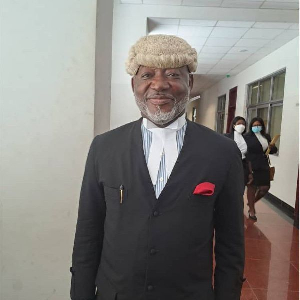 Charles Owusu Juanah is the National Chairman of Friends of Bawumia 08