A four-day workshop on Teaching Sustainable Drainage Systems (SuDS) in Ghanaian TVET and Higher Education Institutions has opened at the University of Skills Training and Entrepreneurial Development (USTED) in Kumasi.
The workshop, which is being held at the Research Commons, USTED Library, from 19th to 22nd October, 2026, is part of the implementation of the project "Embedding Sustainable Urban Drainage System (SuDS) Education into Ghana's Construction Curricula through Transnational Education."
The project seeks to bridge the gap between environmental knowledge and practical engineering skills needed to address flooding and stormwater challenges confronting communities.
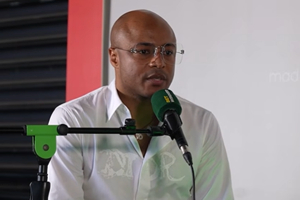
Addressing participants, the Pro-Vice Chancellor of USTED, Prof Isaac Boateng, said the workshop provides an important opportunity to rethink how Ghana trains its engineers and construction professionals.
He noted that the recent destructive floods in Accra in July 2026 are a clear reminder that poor water management threatens livelihoods, damages infrastructure, and puts lives at risk.
"Water is essential to life, but when it is poorly managed, it can threaten livelihoods, damage infrastructure, disrupt education and commerce, and place human lives at risk," Prof Boateng stated.
He explained that rapid urbanisation, climate change, expansion of impermeable surfaces, blocked drains and encroachment on waterways have worsened flooding in Ghana, noting that when intense rainfall meets concrete-covered landscapes, water overwhelms drainage systems.
Prof Boateng called for a paradigm shift in how water is managed, saying "Sustainable Drainage Systems invite us to change our relationship with water: from treating stormwater as waste to managing it as a resource."
He urged universities and TVET institutions to equip students with practical skills to assess sites, estimate runoff, evaluate drainage options and appreciate long-term maintenance and environmental implications, stressing that such competencies must be deliberately cultivated through curricula reforms, fieldwork and industry collaboration.
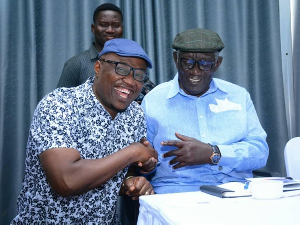
For his part, Associate Professor in Real Estate at Edinburgh Napier University, Dr Cletus Moobela, said it is important for TVET and tertiary institutions to incorporate Sustainable Drainage Systems within their curriculum.
He noted that integrating SuDS into construction education will equip future professionals with the practical skills needed to tackle flooding and environmental challenges in Ghana.
Dr Moobela called on participants to take deliberate steps that will ensure a sustainable future for the next generation.
He further urged stakeholders to translate the knowledge gained from the workshop into actionable reforms in teaching and infrastructure development.
Regional News of Monday, 19 October 2026
Source: otecfmghana.com
USTED holds workshop to embed sustainable drainage systems (SuDS) Into Ghana's construction curricula
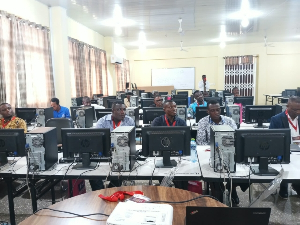 Photo of student seated at the workshop