The National Anti-Illegal Mining Operations Secretariat (NAIMOS) taskforce has reportedly raided an alleged illegal mining site at Essaman in the Wassa East District of the Western Region, destroying vehicles, motorcycles and wooden structures during an unannounced operation.
The raid, which reportedly took place early in the morning, targeted a site believed to have been used for illegal mining activities, popularly known as galamsey. Personnel of the anti-galamsey taskforce moved into the bush where the activities were taking place, catching those at the location off guard.
Several vehicles, motorcycles and wooden structures found at the site were reportedly set ablaze or destroyed as the taskforce carried out the operation. However, the exact number of vehicles and motorcycles affected, the value of the damaged properties and whether any arrests were made were not immediately available.
The operation comes amid intensified efforts by the government to curb illegal mining, which continues to threaten Ghana's water bodies, forest reserves and agricultural lands.
NAIMOS, a special-purpose unit under the Ministry of Lands and Natural Resources, coordinates intelligence-led operations against illegal mining in collaboration with security agencies and other state institutions.
At a media briefing in March 2026, NAIMOS officials reported that operations conducted between July 2025 and March 2026 had resulted in 122 operations, 237 arrests, the seizure and immobilisation of 94 excavators, and the destruction of 2,647 chanfang platforms. The figures were presented as part of the Secretariat's efforts to disrupt illegal mining networks across the country.
The environmental consequences of galamsey remain a major concern. In February 2025, the Minister for Lands and Natural Resources, Emmanuel Armah-Kofi Buah, told Parliament that more than 5,000 hectares of forest reserves had been destroyed by illegal mining. He also cited turbidity levels of between 5,000 and 12,000 Nephelometric Turbidity Units (NTU) in affected water bodies, compared with an acceptable limit of 500 NTU.
The pollution of rivers through mining waste, sediment and chemicals such as mercury and cyanide has raised concerns about the safety of water supplies, the cost of water treatment and the livelihoods of communities that depend on these resources.
The reported Essaman raid adds to the ongoing enforcement campaign against illegal mining in the Western Region, an area that has faced persistent pressure from mining activities.
However, details of the operation, including the identities of those responsible for the site, the precise quantity of property destroyed and any follow-up legal action, remain unconfirmed. Authorities are yet to provide a detailed public account of the reported raid.
Regional News of Monday, 19 October 2026
Source: www.ghanaweb.com
Galamsey crackdown: NAIMOS taskforce destroys cars, motorcycles at Essaman
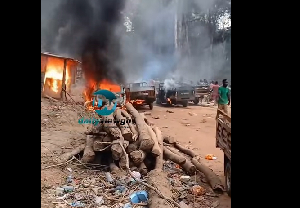 Galasmey hideout at Essaman