A Ghanaian herbal preparation, Vikil²⁰, has shown antioxidant activity and reduced the viability, movement and attachment of prostate cancer cells in laboratory experiments, according to a study published in the journal Integrative Cancer Therapies in May 2024.
The findings provide preliminary evidence for further investigation into the biological properties of the preparation but do not establish its effectiveness or safety as a treatment for prostate cancer in humans.
The research was conducted by scientists affiliated with the University of Health and Allied Sciences (UHAS) in Ho and the Centre for Plant Medicine Research at Mampong. It was brought into focus at the Third Scientific Conference of the Ghana Armed Forces Health Service in 2026.
Professor Clement Okraku Tettey, the lead researcher and a senior academic at UHAS, presented the findings at the conference on Wednesday.
Held under the theme “From Evidence to Impact: Bridging the Gap Between Research, Policy and Practice,” the conference brought together academics, medical practitioners, traditional authorities and other stakeholders to discuss translating research findings into practical applications. Laboratory findings
Vikil²⁰ is a Ghanaian herbal preparation containing plant ingredients including Khaya senegalensis, Azadirachta indica (neem) and Vernonia amygdalina (bitter leaf).
The researchers assessed its antioxidant properties and examined its effects on PC-3 cells, a laboratory cell line commonly used in prostate cancer research. They investigated cell viability as well as cellular movement and attachment.
In antioxidant tests, the preparation neutralised 57.61 per cent of DPPH radicals and 92.88 per cent of ABTS radicals at the highest concentration tested. These laboratory assays measure a substance’s ability to neutralise certain free radicals.
The researchers also found that after 48 hours of exposure, the viability of PC-3 cancer cells fell to approximately 50.5 per cent at the highest concentration tested.
They reported no comparable reduction in the viability of the non-cancerous cells used in the experiment. However, further research is needed to establish whether this apparent difference in response is consistent and clinically meaningful.
The preparation also inhibited the movement and attachment of prostate cancer cells under laboratory conditions. These processes are studied in cancer research because of their relevance to cell invasion and the potential spread of malignant cells.
The researchers further recorded a modest reduction in the secretion of tumour necrosis factor-alpha (TNF-α), a signalling protein involved in inflammation and other biological processes.
Although the results indicate biological activity under the conditions tested, they do not establish how the preparation would behave in the human body or whether it could safely affect cancer progression. Further research needed
The findings highlight the need for additional studies to identify the compounds responsible for the observed effects and establish how they act on cancer cells.
Researchers would also need to investigate the preparation’s toxicity, possible interactions with other medicines, appropriate dosage and whether its active components can reach effective concentrations in the body.
Preclinical studies, including research in appropriate animal models, would be needed before carefully designed clinical trials could assess its safety and potential effectiveness in humans.
The study therefore represents an early stage of investigation rather than evidence that Vikil²⁰ can prevent, treat or cure prostate cancer.
The findings also point to the importance of sustained scientific research into medicinal plants used in Ghana, including collaboration among universities, public research institutions and traditional medicine researchers.
Such work could help establish which plant-derived compounds merit further investigation and whether any may eventually have a role in developing new medicines. No established treatment claim
The researchers’ findings should not be interpreted as evidence that Vikil²⁰ is an established treatment for prostate cancer. Laboratory results do not necessarily translate into similar effects in patients, and the preparation’s safety, appropriate dosage and clinical effectiveness remain unestablished.
Prostate cancer patients should not replace or delay recommended screening, medical assessment or established treatment in favour of Vikil²⁰ or other unproven herbal preparations.
Further independent research will be needed to determine whether the laboratory observations can be reproduced and whether they have any practical clinical significance.
Health News of Tuesday, 27 October 2026
Source: Solomon Nartey, Contributor
Researchers call for further studies on herbal preparation tested on prostate cancer cells
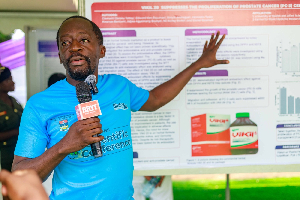 Professor Clement Okraku Tettey, the lead researcher and a senior academic at UHAS