Deputy Minister of Health, Dr Grace Ayensu-Danquah, has indicated that Ghana’s maternal mortality ratio declined by approximately 75.2% between 2000 and 2023.
She made the disclosure during an engagement with key stakeholders on strategies to strengthen maternal healthcare services and accelerate efforts to reduce preventable maternal deaths under the M-MARP initiative.
The initiative forms part of broader efforts by the Ministry of Health to address challenges contributing to maternal mortality and improve health outcomes for mothers and newborns.
According to the latest estimates from the World Health Organization (WHO) and partner agencies, Ghana’s maternal mortality ratio declined from 943 deaths per 100,000 live births in 2000 to 234 deaths per 100,000 live births in 2023.
The decline represents a 75.2% reduction over the period, reflecting significant progress in Ghana’s efforts to improve maternal healthcare.
Despite the progress,"Ghana has made important progress, reducing its maternal mortality ratio from 943 deaths per 100,000 live births in 2000 to 234 deaths per 100,000 live births in 2023, according to the latest estimates from the World Health Organization (WHO) and partner agencies.
"However, this remains far above the Sustainable Development Goal and World Health Organization (WHO) benchmark of fewer than 70 maternal deaths per 100,000 live births by 2030," a statement from the engagement said.
The push to reduce maternal deaths is not merely about meeting an international target but also preventing avoidable loss of life among women during pregnancy, childbirth and the postpartum period.
Every maternal death has consequences that extend beyond the individual, affecting newborns, families and communities.
The Ministry of Health’s renewed focus on maternal healthcare seeks to strengthen the systems and services required to identify and manage complications early while ensuring women have access to quality care when they need it.
The engagement with stakeholders under the M-MARP initiative is therefore expected to contribute to efforts to identify gaps in maternal healthcare delivery and develop strategies to address them as Ghana works towards the 2030 target.
Health News of Monday, 17 August 2026
Source: www.ghanaweb.com
Ghana's maternal mortality ratio declined by 75.2% between 2000 and 2023
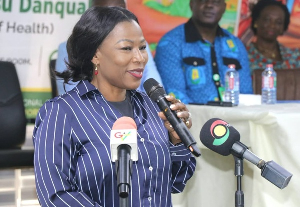 Dr Grace Ayensu-Danquah is the Deputy Minister of Health