The Minister of Health, Kwabena Mintah Akandoh has called for stronger investment in local pharmaceutical manufacturing.
According to him, Ghana cannot guarantee the health security of its citizens while remaining heavily dependent on imported medicines and vaccines.
Delivering an address at PMAG Day 2026, organized by the Pharmaceutical Manufacturers Association of Ghana (PMAG) as part of its 27th anniversary celebration, the minister said: “Advancing pharmaceutical sovereignty is critical to protecting the country from global supply chain disruptions, strengthening industrial growth and accelerating economic transformation.”
Speaking under the theme, "Advancing Ghana's Pharmaceutical Sovereignty Through Innovation, Requisite Skills Mix and Quality Industrial Value Chain for Economic Transformation," Akandoh said the COVID-19 pandemic exposed the vulnerability of countries that rely almost entirely on imported essential medicines and health products.
He explained that pharmaceutical sovereignty does not mean producing every medicine locally but rather developing the capacity to manufacture strategic essential medicines and health commodities while maintaining strong international partnerships.
Such an approach, he noted, would reduce Ghana's exposure to global supply chain shocks and ease pressure on foreign exchange.
World Hepatitis Day: Expert explains major routes of transmission
The minister disclosed that government is implementing policies to strengthen local pharmaceutical manufacturing, including the strategic use of public procurement.
He revealed that more medicines under the national Framework Contract Agreement would be reserved for qualified local manufacturers, provided they meet regulatory, quality, and procurement standards.
"This will create a predictable market for local manufacturers, encourage investment in production capacity and technology, while ensuring value for money and security of supply," he said.
"As access to healthcare expands, local manufacturing must become a central pillar of our health system to ensure reliable access to quality medicines," he emphasised.
Earlier, Vice President of PMAG, Dr Kofi Addo Agyekum, described the celebration as more than an anniversary, saying it represented a renewed commitment to strengthening local pharmaceutical manufacturing and securing Ghana's healthcare future.
He noted that pharmaceutical sovereignty has become a strategic necessity rather than a luxury, requiring innovation, investment in skilled human resources, quality infrastructure, integrated value chains and stronger collaboration among government, regulators, academia, industry, financial institutions and development partners.
Dr Agyekum commended local pharmaceutical manufacturers for their resilience in supplying essential medicines despite operational challenges and said PMAG Day 2026 was designed to showcase the industry's achievements, promote investment opportunities, encourage innovation and stimulate dialogue on positioning Ghana as a competitive pharmaceutical manufacturing hub in Africa.
Delivering the keynote presentation, President of the Association of Ghana Industries (AGI), Dr Kofi Nsiah-Poku, said pharmaceutical manufacturing sits at the intersection of healthcare, scientific innovation and industrial development.
He observed that the COVID-19 pandemic reinforced the importance of domestic manufacturing capacity, warning that countries without strong pharmaceutical industries struggled to secure essential medicines during the global health crisis.
Nsiah-Poku identified high production costs, dependence on imported raw materials, limited research and development investment, inadequate industrial skills, and market challenges as major obstacles facing Ghana's pharmaceutical sector.
To address these constraints, he proposed a five-point industrial agenda that includes strengthening local production of pharmaceutical inputs, establishing a Ghana Pharma Innovation Fund, commercializing university research, developing industry-focused technical skills, enhancing quality standards and expanding government procurement of locally manufactured medicines.
He also urged government to ensure a greater share of medicines procured by public health institutions comes from capable local manufacturers while positioning Ghana to serve regional markets under the African Continental Free Trade Area.
AM
Watch as court takes over Cheddar’s prime property on Osu Oxford street
No contradictions in Finance Minister's Mid-Year Budget presentation - Majority Leader
Afenyo-Markin responds to Finance Minister's 2026 Mid Year Budget Review presentation
Ghana's recovery due to superior economic management - Ato Forson
Majority, Minority chant 'Free Wontumi', 'Bring Ken Back' after 2026 mid year budget review
Health News of Tuesday, 28 July 2026
Source: www.ghanaweb.com
Ghana must build pharmaceutical sovereignty to secure health future - Minister
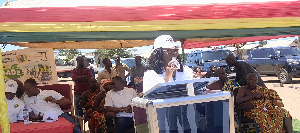
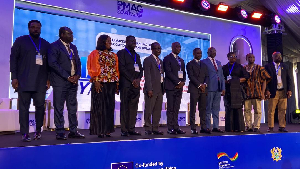 Health Minister Akandoh among other stakeholders in a photograph during the event


Entertainment