A criminologist at the Kwame Nkrumah University of Science and Technology (KNUST), Dr Jones Opoku-Ware, has warned that Ghana's growing drug problem has evolved beyond a criminal justice issue into a major public health crisis that demands urgent national attention.
Speaking during a discussion on the documentary Deadly Doses II, Dr Opoku-Ware said the country's drug landscape had undergone significant changes over the years, making the production, distribution and abuse of illicit substances increasingly difficult to detect and control.
"It is not just a criminal act as we probably used to have it sometimes, but now it is becoming a public or, in fact, it's even become a public health crisis for which all of us as a country have to be very worried about," he said.
According to a report by myjoyonline.com on July 27, 2026, Dr Opoku-Ware explained that the illegal drug trade had experienced a ‘latent metamorphosis’, with traffickers and users adopting new methods that pose greater challenges for law enforcement agencies.
"I think that what is even more worrying is the fact that over the years, there seems to be a gradual shift in the way we used to know substance abuse and drug dealings in the country," he said.
He noted that while drug trafficking previously followed patterns that security agencies could monitor to some extent, current methods were far more sophisticated and difficult to track.
Criminologist identifies root cause of drug abuse in schools
"The mere fact that there is this latent metamorphosis of the drug dealings in the country and abuse is what worries me more," he indicated.
Dr Opoku-Ware added that the changing nature of the trade had made it increasingly difficult for authorities to identify those involved.
"Now we have a system in place that is very difficult to track. And the kind of people that are being introduced to this kind of system that we have now, in terms of the drug dealings, it worries me because even the ones that were somehow done in a way that we could track, we were finding problems in tracking them. How much more those that we are dealing with in a way that is very difficult to track?" he questioned.
He also expressed concern about the growing impact of substance abuse on young people, saying available research suggests that the youth account for the majority of substance abuse disorders in the country.
"Looking at the patterns as we are seeing it now, some research has even suggested that youth are mostly those that are suffering from substance abuse disorder."
"And so, if you have this pattern reflected in the youth or among the youth in a country, it tells you that we really have a grave issue and for which all of us as a country will need to come together," he stated.
Dr Opoku-Ware further observed that Ghana was witnessing a shift from the abuse of individual drugs to the mixing of multiple substances to produce stronger effects.
"Typically, when we talk about drugs in the country, we used to know what we call 'psychedelic drugs'. We had hashish; we used to have cocaine and then marijuana. But what is happening is that now we are having a culture of normal drug combinations," he explained.
Drug abuse crisis can no longer be ignored - Aisha Sena sounds alarm
According to him, users are increasingly mixing synthetic drugs such as Tramadol with cough syrups, painkillers and other substances.
"You have people mixing different types of drugs to produce a certain kind of effect on their bodies and also on their brain. So now it's becoming very difficult for you to even have a scientific name for them because what is happening is people mixing different sets of drugs," he said.
He cited Tramadol mixed with cough mixtures as one example, noting that such locally created combinations continue to evolve, making them difficult for authorities to identify or classify.
Dr Opoku-Ware said users experiment with different combinations for various reasons, including seeking sexual enhancement, relieving stress or coping with depression.
"There are a number of these drugs that are coming up, and, as I said, we may not be able to even put our hands on these, besides the popular ones that we are known to have," he added.
The warning comes amid growing concerns that illicit substances are increasingly finding their way into schools.
These harmful substances are sometimes infused into everyday products consumed by young people such as sobolo, brownies and gummies, making them harder to detect and increasing the risks to public health.
MRA/VPO
South Africa evacuation spared Ghanaians further humiliation - Betty Krosby Mensah
Health News of Monday, 27 July 2026
Source: www.ghanaweb.com
‘Drug abuse now a public health crisis’ - Criminologist warns
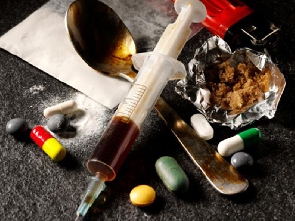 The harmful substances are sometimes infused into everyday products consumed by young people