Former Director-General of the Ghana Health Service and former Presidential Advisor on Health, Anthony Nsiah-Asare, has defended the Akufo-Addo administration’s Agenda 111 programme, insisting the nationwide hospital project was properly planned and backed by committed funding to help address long-standing gaps in Ghana’s healthcare system.
Speaking on Joynews’ Super Morning Show on May 19 2026, Dr Nsiah-Asare said he was surprised by suggestions that the project lacked financial support or was poorly conceived.
“I’m very much surprised because what people say when they are looking for power is different from what they do when they find it,” he stated.
According to him, the Agenda 111 initiative was born out of lessons learned during the COVID-19 pandemic in 2020, when weaknesses in Ghana’s healthcare infrastructure became more visible.
“Government realised that we did not have enough hospitals across the country, and even as we speak now, we still do not have enough hospitals,” he said.
His remarks come in response to recent criticism by President John Dramani Mahama, who questioned the decision by the previous administration of Nana Addo Dankwa Akufo-Addo to begin construction on all 111 hospitals simultaneously.
President Mahama described the approach as financially unsustainable and raised concerns about the management and execution of the ambitious healthcare project.
But Dr Nsiah-Asare argued that the need for more hospitals was real and urgent, pointing to tragic cases where patients reportedly lost their lives after being moved from one health facility to another in search of treatment.
“That is the reason why some years ago, we had a 70-year-old man taken to about seven different hospitals before he lost his life. Recently, we also had a similar case,” he noted.
He explained that Agenda 111 was specifically designed to expand access to healthcare by building district and regional hospitals in underserved communities, reducing the burden on existing facilities and shortening travel distances for patients seeking treatment.
“If we have hospitals serving as referral centres across the country, people will not have to travel long distances to access quality healthcare,” he said.
Dr Nsiah-Asare said the project formed part of a broader national healthcare strategy aimed at strengthening the system from the grassroots level upward, including support for Community-based Health Planning and Services (CHPS) compounds, clinics, maternity homes and district hospitals.
“With health insurance and accessible primary healthcare systems supporting health centres, clinics, maternity homes and CHPS compounds, then we are moving forward as a country,” he added.
He further disclosed that the government had identified major challenges in psychiatric healthcare delivery and incorporated plans to build additional psychiatric hospitals under the initiative.
“We realised that all the psychiatric hospitals were facing challenges, so plans were made to build another psychiatric hospital in the middle belt and another in the northern sector,” he disclosed.
Addressing concerns over funding, Dr Nsiah-Asare maintained that the project had support from several funding sources, including COVID-19 relief funds, budget allocations and oil revenues.
“Today, I want to tell everybody that yes, we started Agenda 111 with the equivalent of 100 million dollars from COVID money, the Oil Proceeds ( Above Budget Formula Allocation),” he stressed.
He also questioned claims that there were no dedicated funds for the programme, asking: “What has happened to it? Where is that money?”
NA/AM
Watch how 'car hijackers' robbed man on a busy highway and escaped unnoticed
Health News of Tuesday, 19 May 2026
Source: www.ghanaweb.com
Agenda 111 was properly funded and designed - Dr Nsiah-Asare
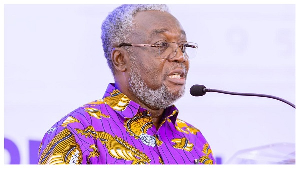 Dr Anthony Nsiah-Asare is the Former Director-General of the Ghana Health Service