Ghana is making remarkable progress in the fight against malaria, with deaths dropping dramatically over the past decade. But health officials say the battle is far from over, as millions of infections continue to affect families across the country each year.
According to the Ghana Health Service, malaria-related deaths have fallen from about 3,300 in 2011 to just 52 in 2025, an extraordinary decline of more than 98 per cent. The achievement stands as one of Ghana’s most significant public health successes in recent years.
Speaking at a press briefing in Accra ahead of World Malaria Day, Dr Nana Yaw Peprah of the National Malaria Elimination Programme (NMEP) said improved diagnosis and treatment are saving more lives.
He noted that the inpatient malaria death rate dropped from 0.21 per 1,000 people in 2024 to 0.15 in 2025, reflecting better care in health facilities. For many families, this means fewer lives lost to a disease that once claimed thousands every year.
Yet, while fewer people are dying, many are still falling ill. In 2024 alone, Ghana recorded about 4.3 million confirmed malaria cases out of more than 12 million suspected infections. Health officials say this highlights a persistent challenge: malaria remains a daily reality in many communities.
Dr Peprah explained that nearly all suspected cases are now tested, but fewer than half are confirmed as malaria. This suggests that many fevers are still wrongly assumed to be malaria, a situation that can delay proper treatment for other illnesses.
The risk of contracting malaria has dropped significantly from 28 per cent in 2011 to about 8.6 per cent today. However, transmission continues across the country, with notable regional differences. While the Greater Accra Region records the lowest rate at around two per cent, other regions still face much higher levels of infection.
Children under five and pregnant women remain the most vulnerable. Although nearly 89 per cent of pregnant women receive at least one dose of preventive treatment, many do not complete the full course. Similarly, while most children targeted for seasonal malaria prevention receive medication, ensuring they complete all doses remains a challenge.
Vaccination efforts are also making an impact, with about 75 per cent of children receiving initial doses of the malaria vaccine. However, this drops to around 60 per cent for later doses, raising concerns about sustained protection.
Preventive measures such as insecticide-treated nets are widely distributed, with Ghana reaching about 87 per cent of its target. Still, many households do not use them consistently, leaving people exposed to mosquito bites.
Health officials warn that financial constraints are slowing the expansion of key interventions, including indoor spraying and broader preventive programmes. New strategies aimed at schoolchildren and low-transmission areas are yet to reach the entire country.
To push toward elimination, Ghana has identified 21 districts with low transmission rates for targeted interventions between 2024 and 2028. The goal is ambitious: to cut malaria deaths by 90 per cent and reduce overall cases by half within that period.
Dr Franklin Asiedu-Bekoe, speaking on behalf of the Director-General of the GHS, cautioned that limited funding and low community participation could undermine progress.
He stressed that the continued misuse or neglect of mosquito nets remains a major obstacle.
“Every malaria death is preventable,” he emphasised, noting that the goal remains zero deaths and eventual elimination of malaria in Ghana.
Beyond the health impact, malaria continues to strain households and the national economy, with families facing medical costs and lost income due to illness.
As Ghana marks World Malaria Day on April 25 under the theme “Driven to End Malaria: Now We Can. Now We Must.”, health authorities are stepping up public engagement through media campaigns, youth outreach, community events, and a national durbar, hoping to bring the country one step closer to ending malaria for good.
NA/AE
Health News of Saturday, 25 April 2026
Source: www.ghanaweb.com
Malaria deaths fall from 3,300 to 52 annually – GHS
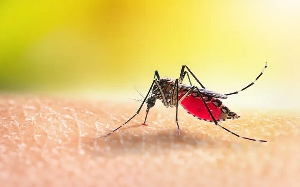 Malaria death has dropped, according to the Ghana Health Service