Minister of Health, Kwabena Mintah Akandoh, has stated that the new Free Primary Health Care programme will allow citizens to access essential services at no cost upon presentation of a valid national ID.
Announcing the policy at a press engagement on Monday, April 13, 2026, the Minister of Health, Kwabena Mintah Akandoh, said the initiative is aimed at removing financial barriers that often prevent people from seeking timely medical care.
“It is important to emphasise that there will be no cost for preventive, promotive, as well as, curative services within the Free Primary Health Care service package. The only requirement is a valid national ID,” he stated.
For many Ghanaians, particularly those in underserved communities, the cost of basic healthcare has long led to delayed hospital visits or reliance on self-medication.
The new policy seeks to change this by improving access to primary healthcare and encouraging early diagnosis before conditions worsen.
The programme forms part of Ghana’s broader push toward Universal Health Coverage.
Currently, coverage stands at about 56 per cent, with a target of reaching 80 per cent by 2030.
Despite interventions such as the National Health Insurance Scheme (NHIS) and the Community-based Health Planning and Services (CHPS) initiative, many citizens still pay out-of-pocket for care-an issue the minister acknowledged continues to delay treatment and worsen health outcomes.
Under the new policy, patients will be able to access free services at CHPS compounds, health centres, and polyclinics nationwide.
These services will include routine screenings for conditions such as hypertension, diabetes, and certain cancers, as well as, maternal and child healthcare, immunisations, and treatment for common illnesses like malaria and respiratory infections.
The initiative will also extend beyond health facilities through community outreach programmes, home visits, and school-based health services, ensuring broader access, especially for those who rarely seek care.
Akandoh emphasised that the programme represents a shift from treating advanced illnesses to prioritising prevention and early detection, which are more effective and less costly to manage.
The rollout will be implemented in phases between 2026 and 2028, beginning with 150 selected districts, particularly in underserved areas before expanding nationwide.
To support the initiative, the government has procured more than 24,000 pieces of medical equipment, including incubators, glucometers, hospital beds, and ultrasound machines, to strengthen primary healthcare delivery.
While services at the primary level will be free, the minister noted that efforts will also be made to enrol uninsured individuals onto the NHIS, enabling them to access more advanced care when needed.
He urged Ghanaians to take advantage of the programme by prioritising regular check-ups and early treatment, stressing that the ultimate goal is to reduce preventable diseases and improve overall health outcomes.
NA/VPO
Health News of Monday, 13 April 2026
Source: www.ghanaweb.com
No fees for new primary healthcare as only National ID required – Akandoh
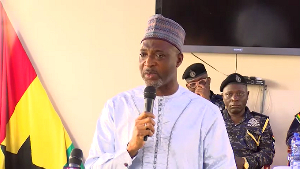
 Kwabena Mintah Akandoh, Minister of Health