Ghana has taken a significant step in strengthening its response to Tuberculosis (TB) with the formal handing over of advanced diagnostic equipment to health facilities across the country, as part of activities marking World Tuberculosis Day.
The equipment, comprising 10 Artificial Intelligence (AI)-enabled digital X-ray systems and 15 GeneXpert machines, will be distributed to key health institutions to enhance early detection and accurate diagnosis of the disease, particularly in underserved areas.
Professor Dr Grace Ayensu-Danquah, Deputy Minister of Health, handed over the equipment to the Ghana Health Service (GHS) during the launch of the 2026 World TB Day in Accra on Tuesday, March 24.
The equipment, valued at approximately GH¢30 million, forms part of broader efforts under the Government’s Free Primary Healthcare programme to expand access to essential services and remove cost barriers to care.
She said it would significantly reduce delays in diagnosing TB cases and improve treatment outcomes.
The intervention represented a critical shift from policy commitments to practical, on-the-ground support for frontline healthcare delivery, noted Prof Ayensu-Danquah, also the Member of Parliament for Essikado-Ketan.
She said timely diagnosis remained one of the biggest challenges in Ghana’s TB response, with thousands of cases going undetected each year.
“The handing over of these machines is not just symbolic; it is a decisive investment in saving lives and breaking the chain of transmission,” she stated.
The new GeneXpert machines are expected to provide rapid molecular testing for TB, including drug-resistant strains, while the AI-powered X-ray systems will support quicker screening and interpretation, especially in facilities with limited radiology expertise.
The deputy Health minister indicated that additional supplies, including testing cartridges and TB-LAM kits, would soon be delivered to complement the equipment and ensure uninterrupted diagnostic services.
She highlighted the role of partners such as the Global Fund and UNICEF, whose support had been instrumental in strengthening Ghana’s diagnostic capacity.
She urged beneficiary facilities to ensure proper maintenance and optimal use of the equipment, while healthcare workers are expected to leverage the new tools to intensify case finding and improve patient outcomes.
Dr Samuel Kaba Akoriyea, the Director General of GHS, called on the healthcare workforce to renew their commitment to delivering good services while urging communities, institutions, and partners to intensify efforts to eliminate tuberculosis as a public health threat.
Chief Austin Arinze Obeifuna, Vice Chair of Stop TB Partnerships and President of the Union Africa Region, commended Ghana for its growing commitment to domestic resource mobilisation, adding that it demonstrated leadership and ownership.
He, however, called for the need to explore sustainable domestic interventions that would help accelerate progress and reduce reliance on external funding.
Chief Obeifuna urged the government to show strong political leadership and commitment, enhance community engagement and partnership, as well as innovation and investment to deliver better results.
As Ghana continues to grapple with an estimated 44,000 new TB cases annually, authorities say the deployment of modern diagnostic tools marks a turning point in bridging the detection gap and accelerating progress toward eliminating the disease.
World Tuberculosis Day, observed on March 24 each year, is designed to build public awareness about the global epidemic of tuberculosis and efforts to eliminate the disease.
The 2026 World TB Day is on the theme: “Yes! We Can End TB! Led By Countries. Powered By People.”
The event was held in partnership with the World Health Organisation, UNICEF, Stop TB Partnerships, TB Voice, and Aurum Institute, among others.
FULL TEXT: Here's why BoG cut the policy rate after its second 2026 MPC meeting
Health News of Thursday, 26 March 2026
Source: GNA
Ghana strengthens TB detection with GH¢30 million investment
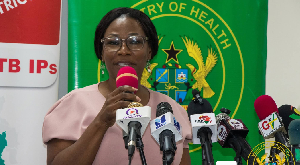 Professor Dr Grace Ayensu-Danquah is the Deputy Minister of Health