The Member of Parliament for Atwima Nwabiagya North, Frank Yeboah, has challenged what he described as an overly optimistic assessment of Ghana’s economy and healthcare system presented by President John Dramani Mahama during the recent State of the Nation Address.
Contributing to the parliamentary debate on the motion to thank the President for his address, Yeboah argued that the picture of progress outlined in the speech does not reflect the realities faced by many citizens.
According to the lawmaker, the President highlighted several initiatives in the health sector, including the regularisation of nursing trainee allowances, reduction of application fees for nursing training colleges, expanded access to training institutions, and the introduction of the government’s “No Fees Stress” policy.
However, Yeboah said recent developments within the sector appear to contradict the narrative of progress.
He cited a directive by the Minister for Health, Kwabena Mintah Akandoh, who reportedly ordered the suspension of the principal of the Nalerigu Nursing Training College for admitting 2,750 students instead of the 750 students approved by government.
Yeboah questioned the justification for the move, arguing that if the government is expanding access to nursing education, qualified students should not be denied the opportunity to pursue training.
“While the President speaks about expanding access to nursing training and removing financial barriers, the Health Minister is asking for the suspension of a principal for admitting more students, claiming it will burden the No Fees Stress policy,” he stated.
The MP further argued that the true condition of Ghana’s healthcare system should be measured by the experiences of people in rural communities.
To illustrate his concerns, he referred to cocoa farming communities such as Worapong in the Atwima Nwabiagya North Constituency and Sefwi Bodi, where access to emergency healthcare services remains a challenge.
Yeboah said that under the previous administration, farmers in remote areas benefited from the drone medical delivery service operated by Zipline, which supplied critical medical items such as anti-snake serum to health facilities.
According to him, the suspension of the government’s contract with the service has left many rural farmers vulnerable in cases of snake bites and other medical emergencies.
He explained that farmers who are bitten by snakes while working on their farms must now arrange their own transportation to health facilities before receiving treatment.
The lawmaker also linked the healthcare challenges to broader economic difficulties facing citizens.
He questioned how cocoa farmers would afford transportation to hospitals when the price paid for cocoa has reportedly been reduced by more than one thousand Ghana cedis per bag.
“If a farmer is bitten by a snake today, he must first find money to travel to the hospital before receiving treatment. Where will that money come from?” he asked.
Yeboah also raised concerns about ongoing electricity outages, popularly referred to as “dumsor,” saying households are increasingly burdened by rising electricity costs and unreliable supply.
According to him, prepaid electricity credit that previously lasted several weeks now runs out within a few days, further straining already struggling families.
“These are the realities confronting Ghanaians today. This is the true state of our health sector and the economy,” he said.
The MP therefore called on government to focus on practical solutions that directly improve the living conditions of citizens rather than relying on what he described as optimistic narratives.
“Ghanaians are suffering,” Yeboah stated, urging urgent action to address the economic and social challenges facing the country.
Health News of Thursday, 12 March 2026
Source: Elizabthe Nkoom, Contributor
Atwima Nwabiagya North MP questions government’s health sector claims in SONA debate
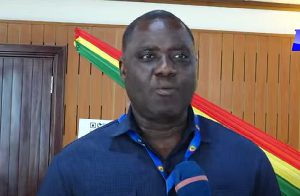 Member of Parliament for Atwima Nwabiagya North, Frank Yeboah