The Government of Ghana has officially launched the revised National Early Childhood Care and Development (ECCD) Policy (2025–2029), marking a transformative shift in the country’s commitment to its youngest citizens.
The policy, which updates the 2004 framework, serves as a comprehensive roadmap to ensure that every child in Ghana, from conception to age eight, receives the integrated support necessary to survive, thrive, and reach their full potential.
Under the leadership of the Ministry of Gender, Children and Social Protection, the policy transition moves Ghana toward a more structured and accountable multisectoral system. It recognizes that 90 percent of brain development occurs before the age of five, framing early childhood investment not just as a social service, but as a critical driver of national productivity and human capital.
Throughout the development of this framework, UNICEF provided extensive technical support to the Government of Ghana.
This collaboration focused on:
• Policy Alignment: Ensuring the policy meets international standards, specifically the Nurturing Care Framework, which integrates health, nutrition, responsive caregiving, early learning, and security.
• System Strengthening: Assisting in the design of the Monitoring, Evaluation, Research, and Learning (MERL) framework.
• Costing and Implementation: Providing technical expertise to develop the Costed Implementation Plan (CIP) to ensure the policy is actionable and sustainable. The 2025–2029 Policy is built upon six strategic pillars designed to provide holistic care: Health: Expanding access to quality antenatal and postnatal care.
Nutrition: Strengthening food security and WASH (Water, Sanitation, and Hygiene) services.
Early Learning: Equipping families and centers for play-based, inclusive pedagogy.
Responsive Caregiving: Supporting parents with the tools for early stimulation. Safety and Security: Strengthening birth registration and protection from violence.
Inclusion: Ensuring equitable access for children with disabilities and marginalised groups.
As the implementation phase begins, the Government calls on all stakeholders, including civil society and the private sector to align their efforts with this national framework to secure a bright future for Ghana’s children.
Health News of Tuesday, 3 March 2026
Source: UNICEF Ghana
Ghana unveils national Early Childhood Care and Development Policy (2025–2029)
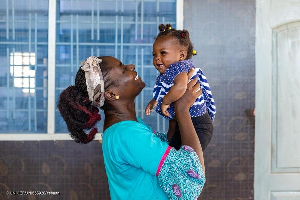 UNICEF provided extensive technical support to the Government of Ghana