The Paediatric Society of Ghana has warned that illegal mining poses severe and irreversible risks to children’s health and brain development nationwide.
The Society urged the Government to treat the situation as a national emergency and take immediate action to safeguard children and protect the country’s future.
In an open letter to the President, signed jointly by Dr Hilda Mantebea Boye, President, and Dr Gabrielle Obeng-Koranteng, General Secretary, the Society said children had drowned in open pits left by illegal mining, also known as galamsey.
It said the activities released toxic substances, including mercury, lead, arsenic, and cyanide, into water sources, soil,l and the food chain, exposing pregnant women and young children through contaminated drinking water, fish, crops, and household dust.
The Society noted that the toxins easily crossed the placenta and entered breast milk, affecting children during critical stages of development.
It cited scientific evidence showing that toxic exposure caused permanent brain damage with no safe exposure level, reduced IQ and learning capacity, speech delays, and behavioural disorders.
It also resulted in anaemia, stunted growth, weakened immune systems, kidney and liver damage, and increased risk of chronic disease later in life.
The letter stated that the impact extended beyond individual health, as children exposed to mining toxins experienced poor academic performance and higher dropout rates, leading to reduced adult productivity and earnings.
Even unborn babies, it added, were not spared from heavy metal poisoning.
The Society referenced estimates by the World Health Organization that lead exposure alone costs low- and middle-income countries hundreds of billions of dollars annually in lost economic productivity.
It warned that Ghana faced rising healthcare costs for dialysis, cancer treatment,t and disability support, placing additional strain on the health system and national finances.
The Society urged the Government to declare galamsey a child health emergency, protect and monitor water sources serving pregnant women, children, and schools, conduct nationwide screening for heavy metals in high-risk districts,s and enforce zero tolerance against illegal mining.
It also called for the establishment of long-term child development monitoring programmes and the inclusion of children.
“Galamsey creates a destructive cycle, and it damages the environment, undermines health and productivity, and weakens Ghana’s capacity to manage resources responsibly,” it added.
The Society emphasised that protecting children from the effects of galamsey was a moral, medical, and economic imperative essential to Ghana’s long-term development and competitiveness.
Mahama, Veep share laughs after Minority presents cocoa pods in Parliament
Health News of Saturday, 28 February 2026
Source: GNA
Galamsey threatens children’s health, society warns
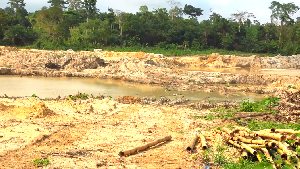 File photo of a galamsey site