The Ningo-Prampram Municipal Health Directorate has held its annual performance review meeting, to assess health service delivery outcomes for the year 2025.
The review was conducted using the holistic performance assessment tool developed by the Ghana Health Service (GHS), which measures the performance of health facilities across regions using standardised indicators.
Patience Ami Mamattah, the Municipal Health Director, said the meeting was to appraise the directorate’s performance for the year under review and evaluate progress made toward achieving the goals of the GHS.
Mamattah explained that at the beginning of 2025, the directorate identified key gaps in health service delivery that required strategic interventions in line with national health objectives.
She noted that the health sector alone could not address all health challenges, as health outcomes were influenced by multiple determinants that required the involvement of stakeholders, including the municipal assembly, private health providers, and community leaders.
“Health has dynamics with various determinants, and stakeholders play critical roles in addressing these challenges,” she said.
She indicated that the performance review provided an opportunity to present achievements and challenges to key stakeholders while strengthening accountability and governance within the municipality.
The municipal director stated that the health sector recorded significant improvements in several performance indicators in 2025.
She noted that negative indicators such as anaemia in pregnancy had declined, while immunisation coverage and other vaccine-preventable disease indicators had improved substantially.
Mamattah, the improvements were attributed to strengthened leadership, staff realignment, enhanced supervision, and the integration of technological support systems in service delivery.
“We consistently analyse our data, reprogramme where necessary, redirect strategies, and motivate staff with support from stakeholders and private health centres. This has enabled us to achieve our goals for 2025,” she said.
Mamattah commended health professionals in both public and private facilities for their dedication and sacrifices in improving healthcare delivery across communities.
She, however, highlighted persistent challenges, including difficult terrain in some communities, poor road networks, and limited internet connectivity, which affected outreach services and timely reporting.
She encouraged health workers to remain committed to their professional calling, stressing that the ultimate purpose of the profession was to serve the population and improve overall health outcomes in the municipality.
The directorate also used the review to award staff and health facilities, both private and public, for their hard work and provision of provisional and quality healthcare for the residents.
Health News of Saturday, 14 February 2026
Source: GNA
Ningo-Prampram Health Directorate holds 2025 performance review meeting
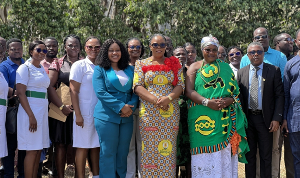 Ningo-Prampram Municipal Health Directorate at its annual performance meeting