The Paediatric Society of Ghana has opened its 2026 Annual General and Scientific Meeting (AGSM) in Koforidua, where experts at pre‑conference sessions warned that climate change, pollution, and illegal mining are worsening child health nationwide.
The three‑day conference is themed “Leaving No Child Behind: Advancing Equitable Healthcare for Children and Adolescents with Non‑Communicable Diseases.” Ha
It drew paediatricians, nurses, policymakers, journalists, and civil society advocates to discuss strategies for tackling asthma, diabetes, sickle cell disease, and other chronic conditions among Ghana’s youth.
On the sidelines of her presentation, Dr Sara Johnson Atunah‑Jay, Co‑Chair of the Society’s Climate Change and Environmental Health Committee, said that environmental degradation was fuelling a surge in respiratory illnesses and congenital disorders.
“We are seeing children and adults with asthma attacks and allergies. Even in the last five days, I’ve had several friends come with sunburns,” she added.
She linked rising strokes among adults in their 40s and 50s to growing environmental pollution and stressors, calling the trend “deeply wrong.”
Dr Atunah‑Jay noted that illegal small‑scale gold mining or exploration, known locally as galamsey, had left “65 per cent of Ghana’s water bodies polluted by heavy metals.”
“We have children who are born with congenital malformations. Doctors are being forced to provide medical abortions because of severe deformities. This is an existential crisis destroying life in perpetuity,” she said.
The Paediatric Society of Ghana is calling for a coordinated national response involving traditional leaders, religious groups, civil society and youth organisations to tackle illegal gold mining and help restore Ghana’s polluted water bodies.
“Clean water means you don’t have children dying of kidney disease or cancer. Every one of us is a change maker. We cannot just say it is the government, it is our responsibility,” she stated.
In a virtual presentation, Prof. Paul Osei Sampene, Professor of Chemical Pathology at the Kwame Nkrumah University of Science and Technology (KNUST), urged delegates to confront the scientific evidence on environmental health and rising child mortality without politicising it or any bias.
“It was never about politics. I am not a member of any political party. My point is: be only scientific,” he said.
He said his research into maternal autopsies in 2024 had revealed troubling patterns of congenital malformations linked to environmental exposures.
He explained that his investigations began after a woman died in a ward and was buried without the removal of her unborn child, which contravenes traditional practice.
“Traditionally, the mother cannot be buried with the baby in the uterus. When I removed the baby, I saw very interesting details. As a doctor, I said, let’s try to understand this,” he added.
The findings, he indicated, pointed to environmental stressors and pollution as contributing factors to rising congenital abnormalities.
Prof Sampene continued, “Later, I realised there should be something wrong somewhere. I started looking into the literature and saw that even in Congo, similar things were happening. That is what brought me to this fact.”
Despite his scientific focus, he stated that his work was often wrongly cast as politically driven or motivated, adding that critics accused him of “trying to bring a political party down.”
“But the signs are clear: strokes, congenital malformations and respiratory illnesses are linked to pollution and stressors. We must face this truth.”
His remarks reinforced points raised in earlier presentations by the Society’s Climate Change and Environmental Health Committee, which warned that galamsey is severely damaging Ghana’s rivers and water bodies.
The presenters also cautioned that uncontrolled environmental pollution was endangering the health of many children and young people, who represent the country’s future resource.
“We are seeing children malformed, mothers suffering, and doctors forced into difficult decisions. This is not random; it is pollution, it is stress, it is wrong,” Prof Sampene said.
Earlier, in her pre‑conference welcoming address, Dr Hilda Mantebea Boye, President of the Paediatric Society of Ghana, reiterated the Society’s commitment to ensuring equitable healthcare for all children.
“We must galvanise attention and policy action to protect vulnerable children from preventable health risks,” she said.
The AGSM runs through Friday with sessions examining interventions, policy measures, and strategies to advance equitable child and adolescent health, alongside efforts to embed environmental health in Ghana’s child‑health agenda.
#TrendingGH: Watch some Ghanaians react to proposed renaming of Kotoka International Airport:
Health News of Friday, 6 February 2026
Source: GNA
Ghana Paediatric Society spotlights child-health risks from climate, galamsey
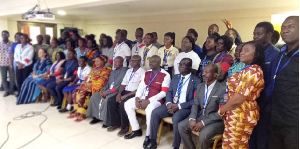 Photo of paticipants at the conference



Entertainment