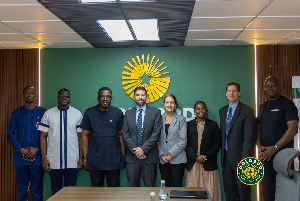
The Society for AIDS in Africa (SAA), as part of its 35th anniversary, has launched a scientific journal in Accra to bridge critical research gaps in African-led research.
The journal, christened “African Journal for AIDS and Infectious Diseases (AJAID)” seeks to provide a dedicated platform for high-quality scientific work on HIV, AIDS and other infectious diseases affecting the continent.
It is committed to prioritising studies that offer context-specific interventions and advancing local solutions that are practical, scalable and effective within African health systems and communities.
This is to confront the persistent challenge of the underrepresentation of African focused studies in major global journals.
Dr. David Parirenyatwa Pagwesese, SAA President, officially launched the journal during the 23rd International Conference on AIDS and Sexually Transmitted Infections (ICASA 2025).
He said, despite the continent being disproportionately affected by the HIV/AIDS epidemic, research that captures the nuances of African socio-cultural, economic, and structural realities often struggle to gain international visibility and influence.
Professor Morenike Ukpong, AJAID Committee Chairperson, said the bilingual journal, by focusing on locally relevant inquiry, aims to directly inform the public, health policymakers, clinicians, and community leaders, translating research findings immediately into actionable improvements in patient care and prevention strategies.
“For too long, the narrative and the data driving global health policy have been fragmented, often missing the unique insights generated by African researchers working on the front lines.”
AJAID is not just another journal; it is a declaration that African science deserves a dedicated, authoritative stage. We are here to ensure that local challenges are met with context-specific rigor,” Prof Ukpong stated.
She said AJAID’s scope is multidisciplinary, welcoming submissions across Biomedical Sciences, Social and Behavioral Sciences, as well as Health Policy and Rights.
Prof. Ukpong explained that the comprehensive approach ensured the journal served as a vital link between academia and public health practice.
Mr Luc Armand Bodea, ICASA Director and SAA Coordinator, called on scholars, especially young scientists in Africa and around the world to seize the opportunity to publish in the newly launched journal.
He noted that the first two years will offer full open-access publications, ensuring that research was widely accessible and had maximum impact.
Prof. Mohomed Chakraun, AJAID Vice Chair, said this would help address three Sustainable Development Goals, including Goals 3, 10, and 17, byadvancing global goals through locally relevant research.
AJAID will provide a voice for African researchers and communities as well as foster innovation to achieve an AIDS-free generation, he
added.
The 23rd International Conference on AIDS and STIs in Africa (ICASA 2025), which began on December 3-8, is organised by the Society for AIDS in Africa (SAA).
It is on the theme, “Africa in Action: Catalysing Integrated and Resilient Health Systems for Sustainable Responses to end HIV, other Infectious Diseases and Emerging Threats.
The five-day conference has about 3,000 delegates, including global experts, policymakers, researchers, community advocates, partners and leaders from 85 African countries are participating.
Health News of Monday, 8 December 2025
Source: GNA
SAA launches journal to advance Africa's research capability
 Society for AIDS in Africa has launched a scientific journal