As the world celebrates World Bee Day 2025, the UK Government is highlighting the impact of its Department for Environment, Food and Rural Affairs (Defra) through the Animal Health System Strengthening (AHSS) Project in Ghana. This initiative demonstrates how international partnerships can advance sustainable development, climate action, and global health security.
Aligned with this year’s theme, “Bee Engaged with Youth,” the AHSS Project is empowering Ghana’s institutions, women, and academic communities through climate-smart beekeeping, inclusive enterprise, and modern veterinary education.
The project has led to the creation of Ghana’s first Bee Health Manual, the establishment of apiaries, and the integration of bee health into university curricula.
Through the project, the Kwame Nkrumah University of Science and Technology (KNUST) and the University of Ghana have formed academic partnerships with UK institutions including the University of Glasgow, University of Edinburgh, University of Surrey, and the Royal Veterinary College. These collaborations have resulted in specialized training for Ghanaian academics, curriculum development, and strengthened veterinary education.
The project has also supported the academic journey of Dr. Emmanuel Dongbataazie Piiru, whose research in honeybee pathology is contributing to Ghana’s growing knowledge base. Under Professor Benjamin Emikpe’s leadership, KNUST introduced a new course, VM 462: Micro-Livestock Medicine, which includes honeybee health.
The curriculum has also been modernized to include emerging topics such as artificial intelligence, bioinformatics, and climate-sensitive diseases.
Women have played a central role in the project’s success. Martha Adjorlolo, after receiving training in the UK, transitioned from administration to become a beekeeper and trainer. She now manages her own apiary and co-founded the National Association of Women Bee Farmers, which has over 80 members.
Sharing her reflections on World Bee Day, the British High Commissioner to Ghana, H.E. Harriet Thompson said:
"The UK is proud to partner with Ghana in advancing sustainable agriculture and climate resilience through the Defra-AHSS Project. This initiative is not only protecting pollinators and biodiversity but also empowering women, youth, and academic institutions to lead the way in innovation and inclusive development. On World Bee Day, we celebrate the power of collaboration to create lasting impact."
Highlighting the benefits of the AHSS project, Professor Benjamin Emikpe, Dean of the School of Veterinary Medicine at KNUST, said:
"The AHSS Project has been a game-changer for Ghana’s honeybee sector. It has strengthened our veterinary education, created new economic opportunities for rural communities, and positioned Ghana as a leader in climate-smart beekeeping.
We are grateful for the UK’s support and look forward to deepening this partnership for the benefit of our people and environment."
The AHSS Project is contributing to poverty reduction by creating income-generating opportunities, supporting rural entrepreneurship, and promoting honey as a viable export commodity. Ghana’s honey market grew by 25% in 2023, reaching a value of $154,000.
Aligned with Ghana’s Climate Prosperity Plan and National Adaptation Plan, the project supports biodiversity conservation, green jobs, and sustainable agriculture. It also advances the UK Foreign Secretary’s 2024 priorities of reconnecting with the Global South, addressing climate change, and promoting inclusive development.
The UK Government’s support through the Defra-AHSS Project is a model for impactful international cooperation. By investing in education, research, and community engagement, the project is helping Ghana build a resilient and innovative honeybee sector.
Health News of Monday, 26 May 2025
Source: British High Commission, Accra
UK government's Defra-AHSS project boosts Ghana's honeybee sector on World Bee Day
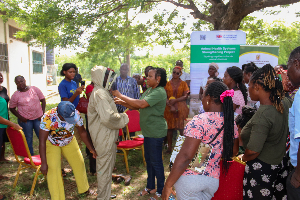 A shot at the Kings Lynn Beekeepers Association Apiary during a practical session




Entertainment