The World Health Organisation (WHO) has urged African countries to scale up the integration of traditional medicine into primary healthcare to advance Universal Health Coverage (UHC).
Dr Angela Ackon, Technical Officer for Quality and Safety at the WHO Ghana Office, said capacity building was essential, adding that the organisation would continue to provide technical assistance, particularly in research, to strengthen evidence in traditional medicine.
She made the call at a high‑level meeting during the 23rd International Conference on AIDS and Sexually Transmitted Infections in Africa (ICASA 2025) in Accra.
It was held on the theme: “Africa in Action: Catalysing Integrated and Resilient Health Systems for Sustainable Responses to end HIV, Other Infectious Diseases, and Emerging Threats.”
Dr Ackon said global data showed that 80 percent of the world’s population used traditional medicine, with similar reliance in Africa. She said this demonstrated broad acceptance of traditional medicine.
She noted that the number of registered traditional medicine products in Africa had increased from 20 in 2000 to 100 in 2023, while funding for related research had doubled.
Dr Ackon said this progress indicated advancement across indicators related to traditional medicine and encouraged African countries to expand herbal medicine units and include traditional medicine products in health insurance schemes to strengthen collaboration between traditional and allopathic practitioners.
She said Ghana had increased the number of facilities integrating traditional medicine from 19 in 2012 to 55 in 2023, matching Tanzania, which offered both traditional and biomedical treatment.
Speaking on “Global Perspectives on Integrating Traditional Medicine into Primary Healthcare,” Dr Ackon said countries such as China, Vietnam, Japan, and Korea, which had fully integrated traditional medicine, were performing strongly.
She said integration enhanced access and health equity, particularly in underserved areas, and promoted a holistic, patient‑centred approach with improved condition management and fewer side effects.
Dr Ackon outlined WHO strategies to advance traditional medicine and called on stakeholders to support policies, encourage innovation,n and engage communities to ensure products remained safe, effective, ve and relevant.
Dr Mavis Boakye‑Yiadom, Head of the Department of Clinical Research at the Centre for Plant Medicine Research, who spoke on “Strengthening the Role of Traditional Medicine in Primary Healthcare in West Africa,” said that although 55 facilities in Ghana had integrated traditional medicine, the National Health Insurance Scheme did not cover prescribed herbal medicines.
She said challenges included assessing safety and efficacy standards and stressed the need for traditional medicines to meet uniform standards.
“The most important thing is that we are using plants, but then we are not growing these plants. We are not putting them back as we are supposed to do.
“So, with time, these plants might go extinct, and this is something that we need to work on. We need to put up more of our plant medicine farms so that in the end, we don’t get locked up,” she said.
ICASA 2025, organised by the Society for AIDS in Africa, is being held from December 3–8 with about 3,000 delegates, including global experts, policymakers, researchers, community advocates, partners, and leaders from 85 African countries.
Health News of Thursday, 18 December 2025
Source: GNA
Traditional medicine key to UHC in Africa - WHO
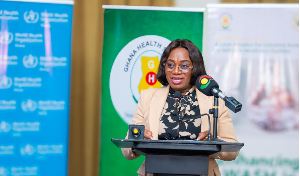 Dr Angela Ackon is the Technical Officer for Quality and Safety at WHO Ghana