More than 40 per cent of people living with HIV in the Ashanti Region are currently not on treatment, posing a significant public health risk, the Regional Director of Health Services, Dr. Fred Adomako-Boateng, has revealed.
Speaking at a media briefing to mark this year’s World AIDS Day in Kumasi, Dr Adomako-Boateng expressed concern that despite notable progress in HIV testing and treatment uptake, a large treatment gap continues to undermine efforts to control the spread of the virus.
According to him, out of an estimated 63,159 people living with HIV in the region that should be on treatment, only 33,199, representing 52.9 per cent are currently receiving antiretroviral therapy.
“This means approximately 29,960 individuals either do not know their HIV status or are not on medication.
This gap poses a significant public health risk, and the only way to bridge it is by improving testing, increasing awareness, and making prevention services easily accessible everywhere,” he said.
Dr Adomako-Boateng noted that although the region had recorded progress such as a 28.2 per cent increase in clients on treatment and thousands of new enrolments, the gains would be undermined if people continued to shy away from testing and treatment.
He stressed that HIV was preventable, and free testing and treatment available at health facilities across the region.
“Knowing your status is the first and most powerful step in protecting yourself and those you love,” he said, urging especially men and young people to take testing seriously.
The Regional Health Director further highlighted the availability of pre-exposure prophylaxis (PrEP), a daily medication that reduces the risk of acquiring HIV by more than 90 per cent.
Dr Adomako-Boateng also emphasised the urgent need to end stigma and discrimination, which he described as major barriers to testing and treatment.
“Stigma prevents people from testing and forces others to hide.
HIV is a health condition, not a moral judgment.
People living with HIV deserve love, respect, and dignity,” he stressed.
He assured the public that the Ashanti Regional Health Directorate remained committed to expanding access to HIV services through stronger collaboration with traditional leaders, schools, and the media.
He urged the public to take personal responsibility for protection and testing.
Health News of Tuesday, 2 December 2025
Source: GNA
Over 45% of people living with HIV in Ashanti not on treatment
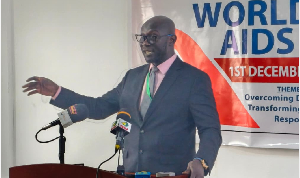 Dr Fred Adomako-Boateng is the Ashanti Regional Director of Health Services