Dr Betty Bandoh Oppong, a Research Scientist at the Biomedical and Public Health Research Unit (BPHRU), Water Research Institute (WRI), and Council for Scientific and Industrial Research (CSIR), has called on citizens to join forces to eliminate malaria.
This, he said, would safeguard lives, especially the vulnerable, and increase productivity.
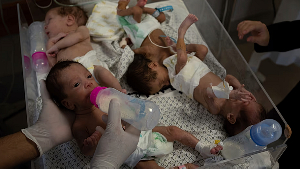
Among the vulnerable are pregnant women who could have stillbirths, preeclampsia, low-weight babies, and loss of babies to malaria, and children under five years, who could suffer less concentration in school due to anaemia, convulsions, or even death from malaria.
Dr Oppong made the call at the observation of the 2025 World Malaria Day by the BPHRU in Accra on the theme: “From Bites to Breakthroughs – Reinvest, Reimagine, and Reignite” and the sub-theme: “Sharing Concepts of Disease Prevention and Control to Reignite Investments in Malaria Research”.
She said disability, organ damage, deaths, general lack of well-being, and inability to work were also general impacts of malaria.
Aside from affecting productivity, Dr Oppong said malaria treatment and management became a big burden on resource-poor communities at peak malaria season, and there was also a strain on healthcare systems.
“Looking at malaria’s impact on society, family income is affected due to lost workdays by caregivers, and there is an increased poverty and food insecurity,” she added.
Dr Oppong, speaking on the topic: “Malaria Impact and Elimination Attempt: Our Collective Role”, said Africa has the highest disease burden of malaria, and Ghana has over two per cent of all cases on the continent.
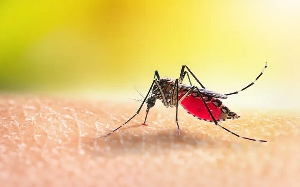
The general symptoms, which mostly begin to show between seven to 14 days of bite, she said, included fatigue, nausea, vomiting, cough, respiratory problems, chills, and fever.
She believed malaria could be eliminated from the country but needed a concerted effort from all, including researchers, healthcare providers, the entire populace, and government, especially with investments, to make it possible.
Dr Joseph Harold Nyarko Osei, a Biomedical and Research Scientist at WRI, CSIR, said malaria had been one of the ancient human diseases for about 100,000 years.
In 2023, about 263 million malaria cases (94 per cent from Africa) and 597,000 deaths (95 per cent from Africa, with 76 per cent being children under five years, were reported globally, he said.
He mentioned the transgenic approach, spatial repellents, attractive toxic sugar baits, insecticide-treated wall linings, insecticide-treated eave tubes, drone-assisted larviciding, and drone-assisted vector mapping as some of the control interventions in the modern age.
Another intervention they intend to work on in the future, he said, is artificial intelligence-driven vector mapping and a digital vector surveillance system.
Dr Osei called for education on health systems, the environment, and malaria to be intensified, especially in basic schools and communities, to enlighten them on some basic vector control interventions to prevent malaria infections.
Dr Akua Kyerewaa Botwe, a Malaria Expert and Research Scientist, speaking on the topic: “Malaria Vaccine Innovations for Prevention and Control”, said 130 malaria vaccines were at different stages of development globally, out of which 90 per cent targeted plasmodium falciparum, the most virulent of all the species.
She outlined pre-erythrocutic vaccines and erythrocytic and transmission-blocking vaccines as the malaria vaccines targets in the parasite life cycle.
Health News of Monday, 28 April 2025
Source: GNA
Malaria can abort pregnancies and cause infant deaths - Researchers
 File photo