Health News of Tuesday, 23 December 2025
Source: Kofi Aduonum, Contributor
Kpong Health Center receives new maternity block

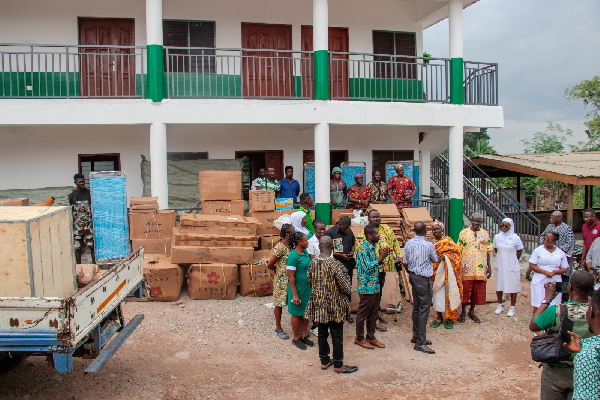
Ensign Global University, in partnership with the Church of Jesus Christ of Latter-day Saints and the Manya Krobo Traditional Council, has officially handed over a newly constructed maternity block to the Kpong Health Center.
The facility is expected to significantly enhance maternal and child healthcare services in the municipality and surrounding communities, marking a major milestone in collaborative efforts to strengthen healthcare delivery in Ghana’s Eastern Region.
Speaking on behalf of Ensign Global University, Professor Stephen C. Alder, underscored the University’s commitment to community partnership, emphasizing a shared vision of growth and continuous improvement through service.
Gena Alder reaffirmed this commitment, noting that the project reflects Ensign Global University’s dedication to addressing maternal and child health gaps through sustainable, community-focused partnerships.
The Municipal Chief Executive, John Atteh Matey, expressed appreciation on behalf of the municipality, commending the partners for their generosity and pledging continued collaboration to improve access to quality healthcare.
Representing the Konor of the Manya Krobo Traditional Area, Nene Kpaibitey Nayko II described the maternity block as the beginning of transformative progress for the health center and the wider community, reiterating the traditional leadership’s commitment to partnering with reputable institutions to promote the well-being and prosperity of the people.
President Stephen Manortey, District President of the Church of Jesus Christ of Latter-day Saints, whose organization donated equipment to furnish the facility, highlighted the strong collaborative spirit behind the initiative.
He noted that the project was the result of collective efforts by the community, the Church and Ensign Global University, affirming that meaningful impact is achieved when committed partners work together.
The new maternity block stands as a powerful symbol of collaboration among academia, faith-based organizations, traditional leadership, and local government.
It is expected to improve maternal and child health outcomes, reduce healthcare disparities, and strengthen trust between the Kpong Health Center and the communities it serves.