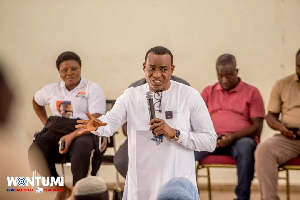
The Ghana AIDS Commission (GAC) has inaugurated HIV and AIDS Committees in the 12 administrative districts and municipalities of the Bono Region to intensify prevention, awareness creation, and response activities at the local level.
Each of the nine-member committees is chaired by the respective Municipal or District Chief Executive and includes the municipal or district director of health, a representative of the Ghana Education Service, civil society organisations, traditional authorities, faith-based organisations, Persons Living with HIV (PLHIV), and an HIV focal person at the assembly.
Speaking in an interview with the Ghana News Agency (GNA) on the sidelines of the inauguration ceremony in Sunyani, Mr Ahmed Ibrahim Bambilla, the Bono Regional Technical Coordinator of the GAC, urged members to be diligent and proactive in deepening HIV and AIDS interventions in the region.
He explained that the reconstitution and integration of the committees were aimed at strengthening stakeholder collaboration to curb the spread of HIV and AIDS at the local level.
Mr Bambilla noted that the committees had the mandate to co-opt additional members whose expertise might be required, stressing that the Bono Region had consistently recorded the highest HIV prevalence in the country over the past three years.
He therefore emphasised the need to strengthen decentralised structures, adding that the committees served as the highest decision-making bodies for HIV-related activities within their respective assemblies.
Mr Bambilla expressed concern about inadequate funding for the HIV and AIDS response from the District Assembly Common Fund. He urged the assemblies to supplement allocations with their Internally Generated Funds (IGF) to support HIV programmes.
He said the committees were expected to submit periodic reports to the Regional Committee to ensure accountability and enhance effective implementation of HIV and AIDS activities.
Mr Bambilla encouraged the committees to design context-specific interventions, explaining that the terrain, demographics, and challenges varied across districts and municipalities and therefore required tailored approaches rather than uniform strategies.
“Based on your understanding of the local environment and challenges, you can come up with interventions to mitigate those challenges so that together we can improve the district-level HIV response,” he stated.
Health News of Tuesday, 7 April 2026
Source: GNA
GAC inaugurates HIV committees in Bono Region
 Logo of Ghana AIDS Commission