The Forum for African Women Educationalists (FAWE)-Ghana has trained journalists in the Upper East Region to champion Adolescent Sexual and Reproductive Health and Rights (ASRHR) reporting as part of efforts to reduce teenage pregnancies.
The three-day workshop, held in Bolgatanga under the SHARE Project, brought together 19 media practitioners to strengthen their knowledge and capacity to raise awareness on reproductive health issues, reduce harmful practices, and address gender inequalities.
The SHARE Project is being implemented by a consortium led by Right To Play, with FAWE-Ghana serving as the advocacy arm, WaterAid providing health-related support services, and FHI 360 acting as technical consultant, with funding support from Global Affairs Canada.
Mr Elikem Katsekpor, Project Officer for the SHARE Project, said the training sought to build a strong partnership with the media practitioners, who were key in amplifying advocacy and sustaining progress in adolescent health.
“As organizations, we can only achieve long-lasting results if journalists are empowered to report on sexual and reproductive health and rights issues. The media serve as watchdogs to ensure the gains made in communities are sustained,” he noted.
Mr Katsekpor said FAWE had already engaged parents, caregivers, and communities in training sessions on reproductive health, gender equality, and harmful traditional practices.
“Community dialogues are also ongoing in 78 electoral areas to identify knowledge gaps and propose practical solutions,” he added.
He, however, expressed concern about the increasing abuse of emergency contraceptives by adolescents, noting that the trend could lead to serious long-term health problems if not addressed.
Mr David Kwesi Ghartey Tagoe, a lead facilitator at the workshop, said the initiative was designed to empower journalists to become advocates of ASRHR.
“Journalists are very powerful. The stories you tell influence society. When you report consistently on reproductive health and gender issues, duty bearers and policymakers will sit up and act,” he emphasized.
He noted that in Ghana, political discourse often overshadows social issues such as adolescent health, and urged journalists to use their platforms to keep reproductive health high on the public agenda.
The training formed part of FAWE Ghana’s broader advocacy drive to ensure young people have access to accurate information to make informed choices about their health and wellbeing in Bongo and Kassena Nankana West Districts, and the Kassena Nankana and Builsa North Municipalities.
Health News of Monday, 15 September 2025
Source: GNA
FAWE Ghana trains journalists to spearhead reproductive health campaign
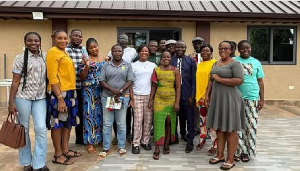 Participants of the training in a group photo