The National Ambulance Service (NAS) authorities have been urged to make public charges inherent in their operations in the county.
The NAS is one of the humane interventions the erstwhile Nana Akufo-Addo-led government rolled out to address emergency services.
Through this intervention, every constituency owns an ambulance, which makes the transfer of patients and accident victims who need critical and urgent medical attention faster.
However, the National Ambulance Service operations are allegedly shrouded in secrecy, as the public does not know its fees and charges.
A beneficiary of NAS, who spoke to the Ghana News Agency on condition of strict anonymity for fear of victimization, said his son was referred to the Korle Bu Teaching Hospital in Accra by a doctor at the Ho Teaching Hospital (HTH), and an ambulance was arraigned for him last Wednesday.
He continued that the driver of the ambulance demanded GHC1,100 for fuel, which he readily provided.
The man stated that upon reaching a fuel filling station, the driver bought GHC700 worth of fuel and kept the rest of the money and the receipt, but considering the condition of his son, he did not question him.
He said that, on reaching their destination, he narrated what happened to a lady friend he met there, who told him she had paid GHC1,500 before her mother was brought to Korle Bu.
Another lady, who also spoke to the GNA, disclosed that her brother had an accident and was rushed to the Ho Teaching Hospital (HTH) last week, and the medical officer who attended to him asked them to do a scan of the head.
She said the ambulance services cost her GHC40 from the HTH, where they did the scan, a distance of about 300 meters.
She noted that the driver told her the money was for fueling the vehicle.
The clients who used the services of NAS demanded that the authorities come out publicly with their fees from destination to destination.
They contended that without that, some drivers of NAS would exploit the vulnerability of those who needed their service to enrich themselves.
Mr Amos Dzah, Public Relations Officer of Ho Teaching Hospital, in an interview with the Ghana News Agency, said by policy that NAS does not charge, “but what pertains sometimes is the demand for cost of fuel to destinations.”
Health News of Sunday, 2 March 2025
Source: GNA
Authorities of National Ambulance Service urged to make their charges public
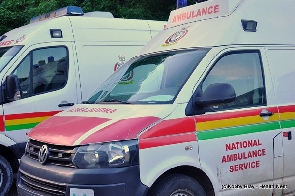 The erstwhile Nana Akufo-Addo-led government rolled out NAS to address emergency services