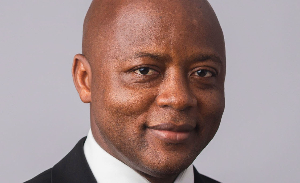
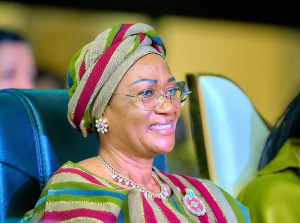
Joy FM’s latest attempt to rejuvenate the Super Morning Show is interesting beyond whoever is brought in to join breakfast in Kokomlemle. For much of last year, the programme was largely carried by Winston Amoah and Kojo Akoto Boateng, with occasional appearances from the new, younger and refreshingly opinionated Kwaku Asante and others. Kojo Yankson, its lead voice for over nine years, is not always available these days. Then, on September 4, the Multimedia Group announced that Naa Dedei Tettey had joined the guys. This was after a long search that even saw Joy FM venture onto the desperate grounds of LinkedIn, hoping suitable candidates would find them.
For observers, Kokomlemle’s efforts prompt a larger question about the morning show itself: what exactly is there to rejuvenate, and what should a morning show look like in a media environment that has changed so radically around it?
For a long time, it was easier to describe the morning show as the most consequential battleground in Ghanaian radio. Till today, there are many influential current affairs or socio-political shows scattered across radio, but the 6–10am belt is reserved nearly everywhere in Ghana for a common programme. Once upon a time, morning shows marked the seriousness of stations, made national figures out of presenters and organised much of the day’s political conversation. Duty-bearers went there to explain themselves. Newspaper headline reviews sparked national debates there, on morning shows.
I am no fan of grand histories or of reducing entire periods to single, bombastic narratives, so I will not attempt one here. This is not a history of the Morning Show in Ghana. I am simply an ardent radio listener, an old-school head who loved radio so much that I tried to work in it but did not survive the experience for very long.
Joy FM dominated this space for about a decade and a half from the 2000s. The Super Morning Show was an institution, and the late Komla Dumor, followed later by Kojo Oppong Nkrumah, became, in many ways, archetypes of the quintessential morning-show host. Kojo’s departure into politics feels, retrospectively, like an inflection point.
The transition was neither sudden nor a simple story of decline. Joy FM was already experimenting with the programme’s architecture towards the end of Kojo’s tenure, introducing co-hosts and recurring studio voices such as Bernard Nasara Saibu, Nana Ansah Kwao and Francis Abban. A remarkably blunt Graphic Showbiz assessment by Francis Doku (GhMediaGuru), published in February 2014, was already asking whether the programme was “losing soul” and blamed some of that experimentation for its diminishing hold. Kojo Yankson subsequently took over and provided considerable stability, hosting the programme for years.
But look across Adabraka, at what Citi FM was consolidating around the same time.
Bernard Avle was becoming the centre of a recognisable ensemble rather than simply the star presenter of a flagship show. The ever-cheerful, now monochromatic thinker — rigid with constitutional purism and a walking paradox of techno-traditionalism, Efo Dela Sky, was there; so was Nana Ama Agyemang Asante, the “Chief Witch”, whom many unkind fights were visited upon for being “troublesome”; Kojo Akoto Boateng, the outsider technical chap with remarkable range; and Godfred Akoto Boafo, incredibly versatile, very nuanced and a good-faith interlocutor who also brought the warmth of a thoroughly likeable fellow. Later came Nathan Quao, AJ Akuoko Sarpong, Kokui Selormey, Francisca Kakra Forson and, to my friend, Caleb Kudah.
A Citi News report about their appearance on The KSM Show in 2014 was already describing the team in terms of an opinionated “gang”. The KSM Show was talking about it doing things the “Citi style”.
This is where I think the paths diverged.
Joy FM tried [and still does] too hard to imagine, first, an important seat and then challenge itself to find somebody fit to occupy it. Citi’s alternative philosophy was to have a chair and build around it a table of peers.
And what a table it became.
None more central, obviously, than a benevolent, home-trained Christian paternalist with a genuine appetite for recursive discourse and a penchant for normatively rebuking both the people for their mindset and the leaders for their politics. Bernard Avle could begin with a pothole and, given enough airtime, eventually arrive at some theory of citizenship and institutional decay in Africa.
Somewhere along the line, Citi Breakfast Show overtook the SMS, becoming arguably the more culturally consequential morning show on the English-speaking side of Ghanaian radio.
Today, Joy FM increasingly sounds like a pale shadow of a glorious past, quite unsure whether it is still speaking to its mythical “discerning listener” demographic or searching for something else, even after bringing in the former Adabraka man, the brilliant Kojo Akoto Boateng.
It’s not so hard to see what the change is about.
Radio was bound to lose its near-monopoly over serious electronic public conversation. Digital media has lowered the infrastructure required to acquire public consequence. Audiences no longer need a station to identify with — maybe a studio or not, but surely no authorisation.
People increasingly gather around characters with perspectives. It’s a potpourri of hot takes out there today. The attraction is no longer simply the programme and its subjects.
This has made the traditional morning show strangely reactionary for the times. Once, it produced personalities and organised public attention. Increasingly now, it reacts to an attention economy in which personalities and audiences can be convened elsewhere on TikTok Live.
Citi had already anticipated much of this. Its camaraderie, argument and controlled chaos allowed serious analysis to become disagreement, and “hard-core” politics to coexist with jokes and ordinary conversation. Not that this format doesn’t exist elsewhere, but it seems a rather permanent feature of CBS. There is a good example from 2017, when a tweet provoked Bernard Avle so much that he effectively abandoned the expected programme flow for half an hour to think aloud about it.
In some respects, the Citi Breakfast Show is not terribly different from the sensational new-media enterprise, Kwadwo Sheldon Studios, and its Bants and Rants. Their obligations differ, but the audience proposition has converged. Recurring characters, chemistry, strong perspectives and the possibility that somebody will start an argument. You’ll find very KSS-like headlines on Citi’s YouTube and Reels: a debate, someone’s hot take on a matter, and so on.
Crucially, Citi was doing some of this before the proliferation of podcasts. I have maintained consistently that the CBS effectively pre-empted the podcast era in Ghana. Podcasts merely demonstrated at scale that audiences had not lost their appetite for curated conversations; they had acquired different expectations about how those conversations should sound.
The mundane is the joy of the public.
My own experience hosting breakfast radio taught me something else: the mundane is the joy of the public; the framing is the analyst’s job.
On some of those mornings, you could almost watch the audience wake up. The phone lines and messages suddenly became more animated than they had been through the supposedly consequential political discussion. Some of our most incredible audience reactions came when we accidentally wandered into Sallah meat, cuisine and identity, childhood games, storytelling and other ordinary infrastructures of social life. Nostalgia surely plays a role, but people also simply enjoy relatable experiences.
Joy FM feels restrained here for reasons including satisfying its longstanding audience. On this, I have had occasion to point out to good people at Kokomlemle how gravely wrong they are; how that audience is ageing and dying, literally.
But the challenge before the morning show today is bigger, and akin to what Bright Simons has been warning about lately.
A Katanomics diagnosis is instructive here. Crudely put, Ghana’s democracy produces a great deal of political — partisan — interest without corresponding policy grounding. As a consequence, public discourse struggles to sustain attention to the tedious machinery of policy. Typically, the structural questions are sacrificed for the rather unimpressive partisan or uncritical turn that public discourse nearly always takes.
The morning show has historically been one of the few programmes capable of occupying that vacuum. It is where politics and policy can, and must, converge. It is where political claims can be expected to encounter evidence, and where otherwise tedious questions can be made publicly intelligible.
The trouble is that this work is often boring. Worse, the new attention economy increasingly rewards some of the very tendencies that deepen the Katanomics problem. Hot takes are considerably easier to sell than the tedious business of following policy to the deep core of critical governance, procurement, budgets, accountability, etc. New media has the luxury of being interesting first and correct later.
This leaves the morning show with a truly daunting task, especially in this era. It cannot simply imitate the new-media forms competing for its audience, because doing so risks surrendering precisely the epistemic discipline that makes it useful. But neither can it retreat into an anachronistic format. Surely, three hours of policy wonkery will not save morning radio, but neither will three hours of just vibes. A more composite view of this might just be it.
Which brings us back to Joy
Naa Dedei is interesting in this context. She returns to a system she already knows after years at Starr FM, including as a morning-show host. She is versatile, energetic, articulate and, if she has not changed much over the years, something of a firebrand.
She has a little bit of the madness. The SMS could use some madness.
The host, if it’s still Winston Amoah as anchor, cannot merely moderate thought. If they’re set up as peer hosts, they will need to free up a bit.
It would be pointless to recruit interesting people and imprison them inside a format that systematically prevents them from being interesting. That may be the real test of the Joy SMS rejuvenation. Its problem is larger than who occupies the chair.
The old morning show belonged to an age when broadcasters could decide where the national conversation would happen and audiences dutifully arrived. That privilege is gone. The need for the institution is not.
Ghana still needs somewhere politics can be interrogated with casual rigour, where the mundane can carry the concerns of ordinary life, where power can be challenged. And, if it is not too much to ask, where a critical mass of people can be inspired towards some collective good.
The morning show is not dead.
But for Kokomlemle, the old way of doing it increasingly looks like it is.
Opinions of Thursday, 10 September 2026
Columnist: Abdul Karim Ibrahim
What Ghana's changing media habits mean for the morning show
 The morning show lost its monopoly. What did radio lose with it?