Every year, thousands of Arts students struggle with mathematics. Some fail it repeatedly. Some lose university opportunities because of it. Others leave school convinced that they are simply “bad at maths.”
Perhaps the problem is not always the student.
Perhaps, sometimes, it is what we insist every student must learn, and how we insist on examining them.
Consider two students.
Sefa wants to become an actor and broadcast journalist. Glovus is determined to become a top engineer.
Why must Sefa write essentially the same Mathematics examination as Glovus?
Of course, both need mathematics. But do they need the same mathematics, at the same depth, for the same purpose?
Glovus will need strong algebra, geometry, trigonometry and increasingly advanced mathematical reasoning. His future profession will demand it. Challenge him. Stretch him. Give him all the mathematics his engineering ambitions require.
But Sefa will also live in a world of numbers.
He will negotiate contracts, calculate commissions, pay taxes, manage income, understand percentages, budget productions, compare loans, assess investments, interpret audience statistics and perhaps eventually run his own media company.
Why not teach him mathematics deliberately designed for that world?
We have sometimes confused difficult mathematics with useful mathematics.
Pythagoras' theorem is important. Geometry, algebra and trigonometry are indispensable in engineering, architecture, science and technology.
But Pythagoras won't balance your books.
For millions of students heading into law, journalism, acting, hospitality, administration, entrepreneurship, public service and the creative industries, the mathematics that will confront them repeatedly is often far more practical.
Percentages. Interest. Profit and loss. Mark ups and margins. Tax. Payroll. Exchange rates. Inflation. Loans. Mortgages. Savings. Investments. Insurance. Depreciation. Budgeting. Cash flow and basic statistics.
That is mathematics too.
Teach a student why borrowing GHS10,000 can eventually cost considerably more than GHS10,000.
Teach them the difference between revenue, profit and cash.
Teach them why a 50 per cent mark up is not the same thing as a 50 per cent profit margin.
Teach them compound interest before the bank does.
Teach them how inflation quietly destroys purchasing power.
Teach them how to compare two loan offers instead of being seduced by the smaller monthly instalment.
Teach them how to price a product and determine whether the business they are running is actually making money.
Then examine them rigorously on it.
This is not an argument for easier mathematics. It is an argument for relevant mathematics.
We should seriously consider different mathematics pathways at the appropriate stage of secondary education. Every student should acquire strong foundational numeracy. Beyond that foundation, mathematical education should increasingly reflect academic direction and likely professional need.
One pathway could emphasise advanced mathematics for engineering, physical sciences, computing and other mathematics intensive disciplines.
Another could provide rigorous Practical Mathematics and Financial Numeracy, built around accounting, commerce, entrepreneurship, personal finance, statistics and quantitative decision making.
Neither should be treated as the inferior option.
Indeed, a young person who can calculate compound interest, interrogate a loan, understand taxation, prepare a cash flow forecast, analyse basic statistics and recognise a financially disastrous transaction is mathematically educated in ways that can protect him or her for life.
A student should not spend years frightened of mathematics, finally scrape through an examination, celebrate never having to touch the subject again and then walk straight into adulthood financially innumerate.
That is not educational success.
That is a curriculum congratulating itself while the student pays the price.
Education cannot simply preserve what previous generations were taught because that is what we have always taught. It must prepare young people for the world they will actually inhabit.
So yes, teach Sefa Pythagoras as part of his basic mathematical education.
But do not allow his entire academic future to be unnecessarily determined by the same mathematical depth required of Glovus, the future engineer.
Before Sefa leaves school, make absolutely certain he can calculate interest, understand debt, read a bank statement, interpret statistics, prepare a budget, understand a contract involving percentages and know whether his business is making or losing money.
Give Glovus the mathematics to help him build bridges.
Give Sefa the mathematics to help him build a financially intelligent life.
Both are education. Both require mathematics. But they do not necessarily require the same mathematics examination.
Because long after the examination paper disappears, the bills will keep coming.
And Pythagoras won't balance the books.
Opinions of Thursday, 10 September 2026
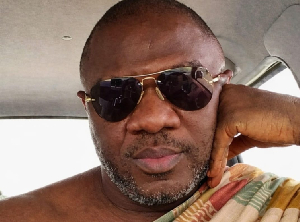
Columnist: Kwame Sowu
Pythagoras won’t balance your books
 Kwame Sowu