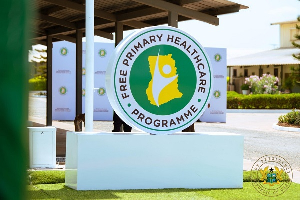
When President John Dramani Mahama recently launched the free primary healthcare initiative, many citizens welcomed it as a bold step toward improving health outcomes and making healthcare more accessible for ordinary Ghanaians.
While discussions have largely focused on hospitals, clinics, and community health centers, one critical space deserves urgent attention in this conversation: our schools.
A significant percentage of Ghana’s population spends most of their day in school environments. Basic school students spend at least eight hours daily in school, while students in boarding senior high schools essentially live there for months at a time.
Yet many schools operate without trained healthcare personnel on site. If Ghana is serious about strengthening preventive healthcare and reducing pressure on overstretched hospitals, then the integration of trained and equipped school nurses into basic and second cycle schools (both private and public schools) should become part of the national strategy.
Across the country, many health conditions that eventually become emergencies begin with small symptoms that are either ignored or poorly managed. Headaches, untreated infections, injuries, asthma attacks, mental health concerns, poor nutrition, menstrual health challenges, allergies, and chronic conditions often go unnoticed until they require hospital care.
A trained school nurse can identify these problems early, provide immediate care where appropriate, and refer students for further treatment before conditions worsen. Early intervention reduces complications, lowers healthcare costs for families, and decreases the burden on already crowded health facilities.
But the role of school nurses goes beyond treating illness. School nurses are also health educators. Through regular health education sessions, they can help children develop healthy habits that last a lifetime- proper hygiene, nutrition, reproductive health awareness, mental health awareness, physical activity, medication safety, and disease prevention. These behaviours do not only benefit the child today; they shape healthier adults who will eventually pass those habits on to their own families.
In this way, investing in school nursing is not simply about healthcare delivery.
It is about nation-building and long-term public health improvement. There is also an economic and employment argument that cannot be ignored. Ghana continues to face challenges with the backlog of trained nurses awaiting posting after completing their education. Meanwhile, schools remain underserved from a healthcare perspective.
A coordinated partnership between the Ministry of Health and the Ministry of Education could address both challenges simultaneously. By creating structured school nursing positions across basic and second cycle institutions, government could improve healthcare access for students while also absorbing trained nurses into meaningful employment.
This initiative does not need to begin nationwide immediately. A pilot programme in selected districts could help government assess cost, impact, staffing needs, and implementation challenges before scaling gradually.
Funding models could also be collaborative. Government support could be supplemented through partnerships with Parent-Teacher Associations, old student associations, NGOs, and private sector stakeholders interested in child welfare and education. Countries that have invested in school health systems consistently see benefits in attendance, academic performance, early disease detection, and overall student wellbeing.
Ghana has an opportunity to build a model suited to our own context. The free primary healthcare initiative is a commendable vision. However, true preventive healthcare must go where people spend most of their time. For millions of Ghanaian children and adolescents, that place is school. School nurses may well be one of the most practical and impactful investments Ghana can make toward achieving healthier communities and a stronger future.
Opinions of Wednesday, 24 June 2026
Columnist: Abigail Ansah
School nurses could be the missing link in Ghana's Free Primary Healthcare agenda
 A trained school nurse can identify these problems early, provide immediate care where appropriate


Sports