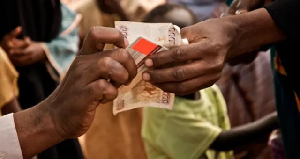
Ghana has been sitting on a fortune for over a century.
The Gold Coast did not earn its name by accident. And yet, for much of that century, the country watched billions of dollars worth of its most prized resource leave its soil, its ports, and its economy, often without adequate return to the communities whose land bore the extraction and whose rivers paid the environmental price.
That era, the government of President John Mahama says, is over.
Since returning to power in January 2025, the Mahama administration has moved with unusual speed and ambition on the question of who controls Ghana’s gold. It established GoldBod, a state-run mandatory intermediary for all gold trading in the country.
It declined to renew Gold Fields’ lease for the Damang mine when it expired in April 2025, assumed interim operational control of the asset, and subsequently awarded management to a Ghanaian contractor through a competitive tender process.
It has given Newmont, AngloGold Ashanti, and Chinese-owned Zijin Mining until December 2026 to hand their operational contracting to locally owned firms. And it is signalling that the Tarkwa lease, one of Africa’s largest gold operations, will face rigorous scrutiny when it comes up for renewal in 2027.
The government has been explicit that this is not blanket nationalisation. The Minister for Lands and Natural Resources has said publicly that the government is not pursuing a policy of state takeover, but rather seeking partnerships that transfer expertise and create more opportunities for Ghanaians.
That distinction between nationalisation and localisation is important. But it is also one that becomes harder to sustain when lease non-renewals, mandatory local ownership rules, and state trading intermediaries all arrive in the same twelve-month window.
The numbers, on the surface, look like vindication. Ghana’s official gold exports nearly doubled year-on-year to $5.1 billion in just the first six months of 2025.
The cedi appreciated more than 40 percent against the dollar since Mahama took office. The Bank of Ghana’s gold reserves reached a record 39.7 tons in August 2025, a fourfold increase in just two years.
But the harder questions, the ones that rarely make it out of Accra’s conference rooms and into community conversations, are only now beginning to surface. And they are questions Ghana cannot afford to leave unanswered.
Has Ghana really been shortchanged?
The popular narrative is that Ghana has given away its gold for a fraction of its value. Politicians across party lines have made careers on this grievance. But what do the verified numbers actually say?
According to Ghana’s Extractive Industries Transparency Initiative and official government reporting, the extractive sector accounted for 12.8 percent of GDP and 10 percent of government revenue in 2023.
Total direct taxes from mining and quarrying rose from GH₵6.38 billion in 2022 to GH₵11.55 billion in 2023, representing an 81 percent increase that made the sector the country’s largest single source of direct domestic tax revenue.
Mineral royalty collections rose further from GH₵2.77 billion in 2023 to GH₵4.90 billion in 2024. Mining companies pay a 5 percent royalty on total revenue, corporate income tax, PAYE contributions, and since 2023, an additional 1 percent levy on gross production.
This is not the picture of a country receiving nothing. The sector’s corporate income tax payments represented 25.5 percent of all CIT collected in Ghana in 2023. Subnational governments receive royalties and taxes from mining companies constituting approximately 40 percent of their budgets.
The mining sector is not a passive bystander in Ghana’s fiscal architecture. It is one of its load-bearing walls.
The legitimate grievance, then, is not that the money is not flowing. It is that the money flows to Accra, and then disappears. Community roads remain unpaved around the very mines that generate those billions. Hospitals serving mining communities lack basic equipment.
The royalty structures exist on paper. What happens after the transfer is where the accountability breaks down.
“The real scandal is not that foreigners took our gold. It is that the money came home and still did not reach us.”
A RECURRING GRIEVANCE AMONG HOST COMMUNITIES ACROSS GHANA’S MINING REGIONS
This distinction matters enormously for the localisation debate. If the problem is revenue leakage after collection, a governance and accountability problem, then changing who operates a mine does not fix it. It merely relocates the point at which money disappears.
The capacity question nobody wants to answer
Running a large-scale gold mine is not a matter of political will. It requires geological expertise, environmental management systems, safety engineering, heavy equipment logistics, international supply chains, experienced metallurgists, and billions of dollars in capital, not just once but continuously across a mine’s decade-long lifespan.
Ghana’s push to transition operational control to Ghanaian contractors has one prominent example at its centre: Engineers and Planners, the company awarded the Damang mine following its lease expiration.
E&P secured a $205 million syndicated loan in February 2026 to support its position, one of the largest financing agreements ever arranged for a locally owned Ghanaian mining company.
The company has more than 25 years of experience as a contractor at the Damang site itself. These are genuine credentials.
But E&P is also owned by Ibrahim Mahama, the younger brother of President John Dramani Mahama. And that single fact has turned what should be a story about building local industrial capacity into one of the most politically contested transactions in recent Ghanaian political history.
THE DAMANG TIMELINE: WHAT ACTUALLY HAPPENED
● Gold Fields’ Damang lease expired April 2025. The government rejected its renewal application and instructed Gold Fields to cease operations and vacate.
● A one-year interim lease was granted to allow safe operational wind-down. Government assumed interim control.
● Three Ghanaian firms submitted bids: Engineers and Planners (E&P), BCM International, and Vortex Resources.
● E&P, owned by Ibrahim Mahama (brother of the President), was named preferred bidder. The lease was formally awarded April 7, 2026. Handover ceremony held April 18, 2026.
● A CHRAJ petition was filed by a private citizen in May 2026. Parliamentary minority has raised conflict of interest concerns. Government says the President recused himself from Cabinet deliberations.
A private citizen filed a petition with the Commission on Human Rights and Administrative Justice in May 2026, demanding investigation into the President over the Damang award.
The parliamentary minority has described the process as lacking transparency and questioned whether it was genuinely competitive, noting the mine is estimated to be worth between $600 million and $1 billion. Government spokespersons have insisted the President recused himself from Cabinet discussions on the matter.
The opposition has countered that recusal from a single meeting does not remove the structural conflict created when a president’s brother stands to acquire a billion-dollar state asset, noting also that E&P had already secured $205 million in financing before the formal award was made.
This is where the localisation agenda begins to invite uncomfortable scrutiny. Genuine local ownership development means building a transparent, competitive ecosystem of Ghanaian industrial capacity. It does not mean replacing one set of connected operators with another.
Ghana has other Ghanaian mining companies with serious operational histories. The tender process and its evaluation criteria deserve the full public transparency that a transaction of this magnitude demands.
What the foreign operators are not saying out loud
The Ghana Chamber of Mines is diplomatically careful in its language. But its warnings carry weight. It has cautioned that lease non-renewals and renewal uncertainties risk creating the perception that security of tenure in Ghana is not guaranteed, language that, in investment circles, translates directly into premium risk ratings, higher borrowing costs, and capital going elsewhere in Africa.
The numbers that tend to be absent from the resource nationalism conversation are the employment and fiscal ones. Gold Fields alone directly employs or contracts around 7,000 Ghanaians, 70 percent of them from host communities. Newmont’s Ahafo and Akyem mines employ hundreds of Ghanaians and have invested in local infrastructure, healthcare, and education. The mining sector’s corporate income tax payments accounted for 25.5 percent of all CIT collected in Ghana in 2023. Ghana’s large-scale gold production grew from roughly 216,000 ounces in 1983, before foreign investment was liberalised, to nearly 3 million ounces in 2025. These are not simply extractive relationships. They are, however imperfect, economic anchors for the communities around them.
The argument that Ghana should own and operate its mines requires an honest accounting of what it takes to replace that ecosystem. Transitioning operational control to Ghanaian contractors is achievable, but only with genuine capital, real technical capacity, and rigorous safety and environmental standards. A rushed transition that underperforms is not a win for Ghana. It is a win for no one.
The uninvited variable: security and what it costs to ignore it
There is a dimension to this conversation that advocates of Ghana’s resource nationalism agenda have been conspicuously slow to integrate: the security environment in which these decisions are being made.
West Africa is not the same region it was a decade ago. Jihadist groups, emboldened by governance collapse across the Sahel, are actively assessed by security analysts as seeking expansion toward the Gulf of Guinea coast. Ghana, Togo, Benin, and Côte d’Ivoire are among the countries identified as most exposed. Australia’s High Commissioner to Ghana, Berenice Owen-Jones, speaking at the West Africa Mining and Security Conference in Accra in October 2025, stated plainly that the security context in West Africa is shifting and that terrorism, violent extremism, political instability, and complex geopolitics present significant challenges for the mining sector specifically. Ghana’s own Interior Minister acknowledged at the same forum that illegal mining has become a frontline security concern, as well as a predicate offence for money laundering, terrorist financing, and arms proliferation.
This matters for the localisation debate in a way that has not been adequately articulated. When a country signals to international investors that tenure is uncertain and that the rules may change with each administration, it narrows the pool of capital willing to take the risk. The pool that remains is often less scrutinised, less accountable, and less particular about where its money comes from or where its profits go. Ghana’s resource nationalism, if not carefully and transparently executed, risks making the country more dependent on the kind of opaque foreign capital it ostensibly wants to reduce.
The operators nobody names directly
And then there is the shadow story. The one Ghanaians discuss on radio programmes and in market conversations, but that official policy documents rarely address with the directness it deserves.
From around 2008, foreign nationals began entering Ghana’s artisanal and small-scale mining sector, bringing mechanisation technology that transformed what had been a labour-intensive, low-yield activity into an industrial-scale operation capable of destroying river systems in weeks. That technology, once introduced, did not depart when operators were deported. It remained. It was replicated. It was turned on Ghana’s most ecologically sensitive landscapes: rivers that serve as the primary drinking water source for millions of Ghanaians.
The environmental record of this period is documented and not in dispute. The Pra, Ankobra, and Birim rivers have been extensively reported as severely polluted by galamsey activity. Community mining schemes designed to formalise small-scale mining and keep proceeds local were reportedly hijacked, sometimes by political figures with oversight responsibilities. Ghana’s own money laundering risk assessment found that approximately 64 percent of illicit and organised crime proceeds posing global security risks pass through environmental and natural resource crimes.
Academic research published in 2025 concluded, with uncomfortable clarity, that Ghana’s war on illegal mining failed not solely due to enforcement weaknesses, but because of what scholars called democracy capture, defined as the systematic appropriation of democratic institutions and enforcement structures by a political and business elite that profited from the very activities they publicly opposed. Across two administrations and multiple declared crackdowns, the pattern repeated itself.
“Ghana’s war on illegal mining failed not because the laws were weak, but because the people enforcing them had interests in seeing them fail.”
ACADEMIC RESEARCH ON GHANA’S ANTI-GALAMSEY REFORMS, PUBLISHED AUGUST 2025
The Mahama administration has taken meaningful enforcement steps. GoldBod has arrested foreign nationals involved in illegal gold trading, including a group whose members, unusually, face imprisonment rather than simple deportation. Legislative Instrument 2462, the framework that had opened forest reserves to mining under presidential discretion, was repealed in December 2025. These represent a meaningful shift in enforcement posture.
But the structural condition that enabled a decade of destruction, namely political protection of illegal operators, has not been dismantled by any of the resource nationalism measures announced so far. Declining to renew a Gold Fields lease does not dismantle the networks that allowed industrial-scale illegal mining to operate openly in protected forest reserves for years. These are two entirely separate problems. Conflating them as one nationalist solution is not only analytically wrong. It is politically convenient.
The question Ghana must ask itself
Resource nationalism is not inherently wrong. The instinct to ensure a country’s people benefit more fully from their natural wealth is not only legitimate: it is a demand any serious government should take seriously. Ghana’s gold belongs to Ghana. That is not a contested position.
But the execution of that principle is where the difference between genuine transformation and elite capture becomes visible. The questions Ghana needs answered are not ideological. They are practical, specific, and urgent.
Who determines which Ghanaian company receives which mining asset, and by what transparent, competitive, independently audited process? What happens to the royalties and taxes after they reach Accra, and who is accountable when they do not reach the communities that generated them? How does Ghana attract the capital and expertise it needs to operate these mines at international safety and environmental standards, while simultaneously signalling that no lease is guaranteed at renewal? And in a sub-region where the security architecture is fracturing in real time, is this the moment to introduce investment uncertainty into Africa’s largest gold sector?
These are not questions asked in defence of foreign mining companies. They are questions asked in the service of Ghana: for the people in the Western Region whose rivers have been poisoned, of the workers whose livelihoods depend on mines that remain operational, of the communities whose royalties exist on paper and vanish in practice, and of a country that deserves to be told the full truth about what resource nationalism means when the primary beneficiaries are connected to the seat of power.
The gold is Ghana’s. That part is settled. What remains unsettled, and what this moment demands Ghana settles honestly, is who in Ghana it actually belongs to.
NB: This analysis draws on verified data from Ghana’s Extractive Industries Transparency Initiative, the Ghana Revenue Authority’s Annual Tax Performance Reports, the Ghana Chamber of Mines’ 2023 Industry Statistics, Gold Fields’ SEC filings, and reporting by Reuters, TIME, Graphic Online, MyJoyOnline, Miningmx, and Africa Defense Forum.
The Damang timeline is reconstructed from Gold Fields’ official SEC disclosures dated April 14 and April 24, 2025. Statistics cited reflect the most recent publicly available figures at time of publication. This piece was produced as part of the GroundTruth project, supported by the Australian Government’s Direct Aid Program.
Opinions of Thursday, 4 June 2026
Columnist: George Owusu
Ghana's Gold, Ghana's Rules: But whose game is it really?
 The mining sector is not a passive bystander in Ghana’s fiscal architecture