Each October, as Ghana celebrates the girl child, we recognise an important truth: girls deserve the opportunity, protection and support to fulfil their potential. The occasion should also prompt a national question: are boys receiving the guidance and care they need to thrive?
This is a call to widen our commitment to children. Supporting boys strengthens the same families, schools and communities in which girls must also be safe, educated and empowered.
UNESCO’s global review of evidence from more than 140 countries found that, in many settings, boys face greater risks at later stages of education, including repeating grades, failing to complete school and achieving poorer learning outcomes. The report also emphasises that girls continue to face serious educational barriers. These findings are global; they should not be mistaken for Ghana-specific statistics. They do, however, make a strong case for examining the needs of both girls and boys in each country and community (UNESCO, 2022).
In my work with senior high school leaders, I have seen how readily a boy’s difficulties can be misread. Frequent absence may be dismissed as stubbornness before anyone asks what is keeping him away. A change in behaviour may attract punishment without a conversation about what lies behind it. A boy experiencing distress may stay silent because he has learned that “men do not cry.”
Research gives us reason to take these patterns seriously. A systematic review of 29 studies involving nearly 25,000 adolescent boys found that restrictive gender norms, including pressure to suppress emotion, were generally associated with more internalising problems and lower social support (Exner-Cortens et al., 2021). The review does not establish that every boy responds in the same way, or that its findings apply identically in Ghana. It does show why schools and families should make it safe for boys to talk and seek help.
Ghanaian research also points to practical gaps. A mixed-methods study of 405 school-going adolescents identified emotional, peer and conduct difficulties, and reported concerns about trust and confidentiality in school counselling. The study is not a national prevalence estimate, but its findings underline a basic requirement: support services must be accessible, trusted and appropriately staffed (Addy et al., 2021).
A 2025 study of students in two second-cycle schools in New Juaben Municipality also examined substance use and its effects on students’ studies and wellbeing. Its local sample cannot represent all Ghanaian students, but it reinforces the value of prevention, peer support and counselling within schools (Appati et al., 2025).
The response should begin with attention and early action. When a student is repeatedly absent, school leaders should follow up, listen and identify whether the student needs academic, family, financial or psychosocial support. When behaviour changes, teachers should maintain clear standards while seeking to understand the circumstances. Discipline matters; it should work alongside guidance, counselling and referral to qualified professionals.
The Ghana Education Service and school leaders should strengthen mentorship and guidance programmes for boys. These should help students make informed career choices, build healthy relationships, manage pressure and ask for help when necessary. Schools should also establish clear, confidential pathways to counselling or other professional services. Mentors can support this work, but they should complement—not replace—qualified counselling.
Parents, too, should make time for honest conversations with their sons. Boys need to learn respect, responsibility and emotional maturity, and to understand that seeking help is a responsible choice. These lessons belong to every child.
Girls and boys alike benefit when families model respect, listen without humiliation and set clear expectations.
Civil society organisations and development partners can contribute by funding programmes that address boys’ education, mentorship, mental health and career guidance. Such work should complement initiatives for girls. Both should be judged by practical results: better school engagement, timely support, stronger wellbeing and improved opportunities for young people.
To every boy who feels pressure to carry his difficulties alone: you matter. You can ask for help, speak honestly and take responsibility for your choices. Strength includes treating others with respect and accepting guidance.
This October, let us celebrate girls and renew our commitment to boys. I call on school leaders, teachers, parents, public institutions and community organisations across Ghana to make that commitment practical. No child should be dismissed, overlooked or left without someone to turn to. When Ghana helps every child to learn, grow and contribute, the whole country benefits.
Opinions of Thursday, 15 October 2026
Columnist: Bless Adzo Apetorgbor Attricki
A national call to support the boy child
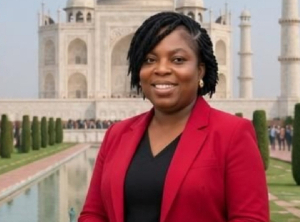 Madam Bless Adzo Apetorgbor Attricki, Higher Institution Officer