The Embassy of Japan in Ghana has formally presented a certificate of appointment to Chef Kahori Kishi as a Japanese Cuisine Goodwill Ambassador, marking a significant step in deepening cultural and culinary ties between Japan and Ghana.
At a brief ceremony held on Tuesday, April 21, 2026, Chef Kishi received a plaque confirming her role, after which guests were taken on a guided tour of her restaurant, Kishitei, in Osu.
Speaking at the event, the Japanese Ambassador to Ghana, Hiroshi Yashimoto, described the appointment as a milestone for both countries, noting that the programme seeks to promote Japanese culinary traditions and cultural values globally.
“The Japanese Cuisine Goodwill Ambassador is a great initiative established by Japan’s Ministry of Agriculture, Forestry and Fisheries in 2015 to promote traditional Japanese cuisine culture.
“So far, as many as 177 ambassadors have been appointed worldwide, including six from the African continent,” he said.
He highlighted Chef Kishi’s alignment with the philosophy of the programme, particularly her emphasis on healthy, natural cooking.
“Her vision is very clear. Food should not only be delicious, but also support life itself. It is the foundation for building a healthy body and mind.
“That is why she uses natural ingredients as much as possible and avoids artificial additives so people can enjoy both health and well-being,” he added.
Yashimoto further described the appointment as a boost to cultural diplomacy, stressing that cuisine remains a powerful tool for strengthening bilateral relations.
“This is exactly what real cultural exchange between Japan and Ghana looks like.
“Her restaurant is already popular among Ghanaian business leaders and members of the diplomatic community, creating a vibrant space for interaction,” he stated.
On the potential economic benefits, the ambassador indicated that growing interest in Japanese cuisine could translate into increased patronage and broader opportunities within the local hospitality sector.
“The more popular her work becomes, the more customers from the Ghanaian community will come. That will enhance cultural exchange and also contribute to economic activity,” he explained.
He also pointed to Ghana’s appreciation of Japanese culture at the highest levels, noting that President John Dramani Mahama has longstanding ties with Japan and an affinity for Japanese cuisine.
In her acceptance remarks, Chef Kahori Kishi expressed gratitude for the honour, pledging to uphold the values of authenticity and wellness in her work.
“I am deeply honoured to receive this appointment and accept it with both humility and a strong sense of responsibility,” she said.
She underscored her commitment to preparing authentic Japanese cuisine using carefully selected ingredients and strict hygiene standards, without artificial seasonings.
“I believe that washoku is not only delicious but a proud part of Japan’s cultural heritage, with the power to nourish both body and mind through the blessings of nature,” she stated.
Chef Kishi also highlighted the philosophy of ishoku dogen — the idea that food and medicine share the same origin — as central to her culinary approach.
“What we eat each day supports our health and enriches our lives. That is why it is important to choose food that is safe, wholesome and beneficial to the body,” she added.
She pledged to use her new role to promote Japanese food culture both in Ghana and internationally.
“With this appointment as encouragement, I will continue to share the true beauty of Japanese cuisine and help pass this rich tradition on to future generations,” she said.
The Japanese Cuisine Goodwill Ambassador Programme, launched in 2015 by Japan’s Ministry of Agriculture, Forestry and Fisheries, aims to promote Japanese food culture worldwide through respected culinary professionals.
Currently, over 170 ambassadors serve across about 70 countries, with only a handful based in Africa.
Chef Kishi’s appointment places Ghana among the select countries on the continent participating in the initiative, further strengthening people-to-people connections through what officials describe as “gastrodiplomacy.”
Diaspora News of Wednesday, 22 April 2026
Source: www.ghanaweb.com
Japan appoints Chef Kahori Kishi as Cuisine Goodwill Ambassador for Ghana
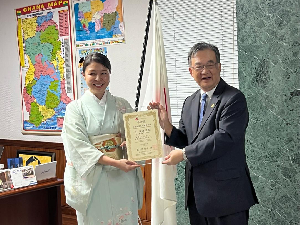 Chef Kahori Kishi with Ambassador Hiroshi Yashimoto