Ghana's Minister for Gender, Children and Social Protection, Dr Agnes Naa Momo Lartey, has reaffirmed the country's commitment to strengthening access to justice for women and girls, telling world leaders that equality cannot be achieved without a justice system that truly works for every woman.
Speaking at the 70th session of the Commission on the Status of Women (CSW70) at the United Nations in New York on International Women's Day, March 8, 2026, the Minister said justice for women and girls is not merely a legal obligation but a cornerstone of peace, human rights, and sustainable development.
"Ensuring justice for women and girls is both a legal obligation and a critical pillar for achieving equality, human rights, peace, and sustainable development," she said during the general discussion segment of the high-level gathering.
Dr Lartey highlighted a draft of legal and policy reforms Ghana has introduced in recent years to advance gender equality, including the Affirmative Action (Gender Equity) Act of 2024, the National Gender Policy covering 2025 to 2034, the Social Protection Act of 2025, the Cybersecurity Act of 2020, the Land Act of 2020, and the Environmental Protection Act of 2025.
She told delegates that Ghana is investing in building gender-responsive justice systems by training judicial officers, law enforcement agencies, social service providers, and paralegals to handle cases involving women and girls more effectively.
Community engagement efforts, she added, are also being intensified to equip women and girls with knowledge of their rights and the channels available for seeking redress.
On gender-based violence, the Minister said Ghana has established specialised units within the Ghana Police Service, created gender desks at both national and local levels, and deepened collaboration among the judiciary, social welfare services, and civil society organisations to improve reporting, case management, and prosecution of offences against women.
Whilst acknowledging the strides made, Dr Lartey was candid that significant work remains.
She noted that social, economic, and structural barriers continue to deny many women and girls meaningful access to justice and that addressing them requires sustained political will and international cooperation.
She concluded her address by reaffirming Ghana's determination to build an inclusive and equitable justice system, pledging to work with global partners to dismantle discriminatory laws, challenge harmful social norms, and ensure that access to justice becomes a lived reality for every woman and girl.
Diaspora News of Tuesday, 10 March 2026
Source: Bridget Mensah, Contributor
Ghana's Gender Minister advocates justice for women at UN
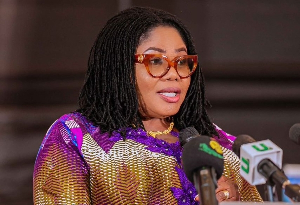 Ghana's Minister for Gender, Children and Social Protection, Dr Agnes Naa Momo Lartey


Entertainment