A major milestone has been achieved in the push for a borderless Africa, with the People's Petition for a Borderless Africa surpassing 10,000 signatures.
This people-led movement, initiated by Africans Rising, aims to promote free movement, unity, and dignity across the continent.
This was made known in a press statement released by Africans Rising 12th January 2026.
“African Union and African leaders should take note that Africans are indeed ready for a borderless Africa therefore the ratifications of the free movement protocol should not wait anymore,” the statement read.
There has been a significant surge in the calls for a Borderless Africa with experts, leaders and businesspeople pushing for removal of visas to improve intra-African travel.
Few months ago, Africa’s richest man Aliko Dangote was seen on video lamenting that he had to secure 34 visas to travel to African countries to invest.
These restrictions and barriers are noted to slow down intra-African trade, economic development and job creation.
In addition to free movement, the petition also calls for the issuance of a common African passport and the introduction of single currency.
“The petition is part of the Borderless Africa Campaign, which seeks to address the legacy of colonial borders imposed during the Berlin Conference, which have divided African communities, weakened economies, and undermined unity”, the statement added.
Despite the adoption of the African Union Free Movement Protocol in 2018 and commitments under the African Continental Free Trade Area (AfCFTA), progress has been slow, with only four AU Member States ratifying the protocol.
In this regard, Africans Rising has called on African citizens to continue signing and amplifying the petition, media institutions should elevate this people-led demand for unity, and policymakers and AU Member States to act with urgency and political courage.
The petition demands urgent ratification and implementation of the AU Free Movement Protocol, removal of visa and administrative barriers, people-centered and gender-responsive mobility policies, and an end to security-heavy border practices that criminalize African movement.
Diaspora News of Monday, 12 January 2026
Source: Hardi Yakubu, Contributor
Major boost to borderless Africa as petition crosses 10,000 signatures
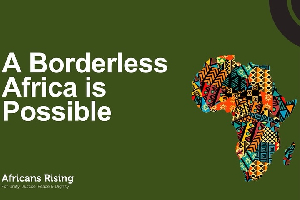 Surpassing the 10,000 signatures marks a major milestone