Diaspora News of Wednesday, 12 November 2025
Source: Issaka Sannie
Ghana's first UK female high commissioner engages NDC diaspora leadership

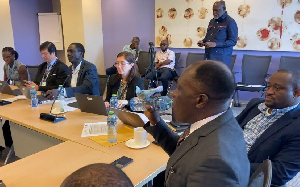
Ghana's High Commissioner to the United Kingdom, Sabah Zita Benson, hosted the National Democratic Congress UK and Ireland Chapter executives at the Ghana High Commission on Friday, 24 October 2025.
The gathering marked one of the first major diaspora engagements since she assumed her historic post as Ghana's first female High Commissioner to the UK and Ireland.
The delegation, led by Chapter Chair Conrad Dumbar, included all wings of the party, branch executives, and Council of Elders.
The Zongo Caucus, as a wing, was represented by its coordinator, Issaka Sannie-Farakhan, assembled at the mission in traditional Ghanaian attire and NDC colours, creating an atmosphere that reflected cultural pride, national identity, and political solidarity.
Benson, whose appointment by President John Dramani Mahama in May 2025 represented a significant milestone in Ghanaian diplomacy, outlined her comprehensive vision for diaspora engagement.
Her approach centres on two fundamental pillars: bringing consular services directly to Ghanaian communities and creating platforms for economic collaboration between diaspora expertise and Ghanaian investment opportunities.
"My priority involves ensuring that every Ghanaian in the UK and Ireland feels genuinely represented," she explained.
"Rather than expecting our citizens to come to us, we must reach them in their communities."
This strategy highlights the depth of her commitment to modernising diplomatic outreach through direct community engagement with opinion leaders, traditional authorities, and civil society organisations.
The High Commissioner's second strategic priority: leveraging diaspora knowledge and capital for Ghana's economic development.
She emphasised creating structured forums where Ghanaian professionals' expertise can translate into concrete investment partnerships, addressing what she described as an "insatiable yearning" among diaspora communities to contribute meaningfully to Ghana's progress.
During her first five weeks in office, she has systematically engaged stakeholders across the UK's Ghanaian communities, including market associations, industry leaders, youth organisations, and traditional authorities.
This methodical approach demonstrates her understanding that effective diplomatic representation requires deep community roots rather than ceremonial distance.
The gathering addressed practical concerns affecting Ghanaian citizens abroad.
She provided transparent assessments of the mission's financial constraints whilst committing to enhanced service delivery within available resources.
She particularly criticised the previous administration's "express service" system, which she characterised as exploitative middleman arrangements that charged Ghanaians for services the mission provides directly.
Her recommendation that citizens approach the High Commission directly for urgent documentation reflects broader efforts to eliminate unnecessary intermediaries and reduce costs for diaspora communities.
This practical focus on service delivery efficiency aligns with contemporary expectations for transparent, accessible diplomatic services.
The High Commissioner's extensive credentials include previous ministerial roles as Information and Tourism Minister under President John Atta Mills, where she coordinated communications during President Barack Obama's historic 2009 Ghana visit.
Her diplomatic experience encompasses serving as Ambassador to the Czech Republic with concurrent accreditation to Slovakia, Hungary, Romania, and Macedonia.
Benson's leadership approach embodies principles I examined in my book, "The Cleaner Sacked The CEO": effective leaders recognise valuable contributions from all organisational levels rather than maintaining hierarchical barriers.
Her engagement with grassroots diaspora organisations demonstrates this inclusive philosophy in diplomatic practice.
The session concluded with Islamic prayers, exhibiting the NDC's traditional
acknowledgement of Ghana's religious diversity.
The ceremonial photography that followed captured a moment of historic significance: Ghana's first female High Commissioner engaging directly with diaspora political leadership, establishing precedents for inclusive
diplomatic representation that prioritises substantive community engagement over protocol formality.
This meeting represents the broader evolution of Ghana-UK diplomatic relations under her leadership, emphasising practical service delivery and economic partnership over traditional ceremonial functions.