A geomatics engineer has broken down why many utility databases fail, how QA/QC changes everything, and what Ghana’s power sector should do next to keep asset data alive.
Speaking with GhanaWeb in an interview, he shared details of how this can be achieved.
The following is a transcript of his responses to questions posed by GhanaWeb to him.
GhanaWeb: Moses, you were previously featured by Vanguard for your work in power-sector digitization. Since then, you have worked on large infrastructure projects in both Ghana and the United States. What’s the one lesson that follows you everywhere?
Moses Tangwam: Data only becomes valuable when people can depend on it under pressure. In utilities, that pressure is outages, emergency response, and revenue leakage. In construction, it’s production speed and tolerances. In both worlds, “having data” is not the win, but having trusted data is.
GhanaWeb: “Trusted data” sounds like a buzzword. What does it mean in the real world?
Moses Tangwam: It means a field engineer can pull up an asset record and act confidently without guessing, calling three people, or re-surveying. Trust comes from clear standards: how data is captured, how it’s checked, and what qualifies as acceptable before it enters the system. That’s why QA/QC isn't just paperwork; it’s a protection mechanism.
GhanaWeb: Your ECG work is often discussed in terms of “mapping assets.” But what was the more important part behind the scenes?
Moses Tangwam: The critical part was building a repeatable method that works across teams and districts. ECG’s goal was to locate and analyze assets across the distribution network and integrate them into a comprehensive geospatial database for operations. My contribution included shaping the survey methodology, GPS data collection approach, database structure, and quality-control rules to ensure consistency across thousands of asset points.
GhanaWeb: You’re saying the “rules” matter more than the map?
Moses Tangwam: Exactly. A map without rules is just a picture. A map with rules becomes an operational tool. The rules answer questions like: “How do we verify a record matches the physical asset in the field?”
GhanaWeb: Let’s talk about revenue. How does geospatial work connect to billing integrity without sounding like theory?
Moses Tangwam: When assets and customers can be linked spatially, invisible patterns suddenly become measurable. ECG’s work documented cases in which illegal and non-metered connections could be systematically identified. In one case-study area, the project reported that over 13,000 structures were illegally tapping into other metered structures, and nearly 500 had direct illegal connections. That’s not theory; those are actionable findings.
GhanaWeb: A critic may ask: “But why do you need geospatial data to find those issues?”
Moses Tangwam: Because electricity networks are physical. If you can’t accurately locate assets and connections, you’re always chasing problems with partial information. Spatial data adds visibility: it helps pinpoint clusters, supports targeted inspections, and strengthens evidence for enforcement, especially when you can tie field observations to a structured database.
GhanaWeb: How does mapping help emergency response when many places don’t have clear addresses?
Moses Tangwam: That’s precisely where asset-based navigation becomes powerful. The maps are used for installation, disconnection, and maintenance, and customers can provide more accurate directions when reporting incidents using asset map information. If a community can’t describe an address but can identify the nearest pole/transformer ID or a mapped landmark, the response is faster and less chaotic.
GhanaWeb: After the data is captured, the more brutal battle is keeping it up to date. What’s your playbook for keeping a utility database “alive”?
Moses Tangwam: Three things:
1. Update pathways: every new connection, replacement, or fault repair should have a simple, mandatory update process.
2. Acceptance gates: submissions should not enter production unless basic checks pass.
3. Audit rhythm: periodic audits so that drift is caught early.
Most databases fail because updates are treated as optional.
GhanaWeb: If ECG wanted to strengthen the system today, what would you prioritise?
Moses Tangwam: I would prioritise contractor and district submission standards. I would also tighten version control, so everyone is working from the latest approved dataset.
GhanaWeb: You’ve worked in construction surveying, too. What does heavy civil work teach that utilities can borrow?
Moses Tangwam: Construction doesn’t tolerate ambiguity because mistakes are expensive immediately. That culture is helpful. Utilities should think the same way about records: if inaccurate data leads to delays, outages, wrong billing decisions, or unsafe work, then it deserves the same discipline construction gives to design control and as-builts.
GhanaWeb: Final question; What should a young geomatics professional focus on to effect institutional change?
Moses Tangwam: Don’t chase tools but systems. Learn to design workflows that people can repeat, audit, and defend. Build standards that endure staff changes. Always link your technical work to measurable outcomes.
AE
Diaspora News of Monday, 5 January 2026
Source: www.ghanaweb.com
'A map is useless if nobody trusts it' - Moses Tangwam on utility-grade geospatial standards
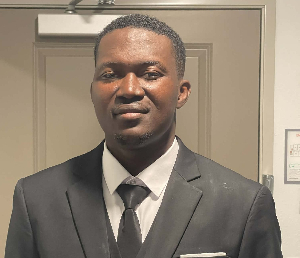 Moses Tangwam is a geomatics engineer