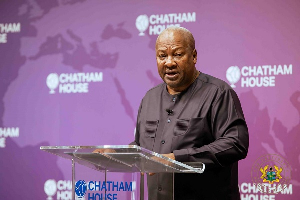
President John Dramani Mahama has described the United Kingdom’s openness to issuing a formal apology for the transatlantic slave trade as a “watershed moment”, saying the development could help advance global efforts towards reparatory justice.
He welcomed British Prime Minister Andy Burnham’s acknowledgement of the atrocities committed during the transatlantic slave trade and his government’s willingness to engage in structured discussions on addressing the historical injustices of slavery and colonialism.
In a statement released by the Presidency on Sunday, November 1, 2026, President Mahama said the UK’s position represented an important contribution to the growing international consensus on reparations.
“I welcome, with cautious optimism and appreciation, the UK Prime Minister’s acknowledgement of the horrific violation of human dignity inflicted by the Transatlantic Slave Trade, as well as the UK government’s openness to a formal apology and structured dialogue,” he said.
President Mahama, who is the African Union Champion on Reparations and Chair of the Global Advisory Panel on Reparatory Justice, commended the British Prime Minister for what he described as a bold and honest reckoning with the United Kingdom’s historical legacy.
He noted that the declaration followed the adoption of a Ghana-led United Nations resolution recognising the transatlantic slave trade and racialised chattel enslavement of Africans as the gravest crime against humanity.
The President said the UK's decision was particularly significant given its abstention during the vote on the resolution.
“We consider this a watershed moment and a refreshing contribution to the growing international consensus on reparatory justice,” he stated.
He, however, stressed that acknowledging the atrocities and offering a formal apology, although important, would not by themselves reverse the suffering and injustices inflicted on millions of Africans and their descendants.
“While an acknowledgement of the atrocities and a formal apology for the grave mistreatment of the millions affected cannot undo the profound injustices of the past, they signal a crucial departure from past denial and open the path toward genuine healing and repair,” he said.
President Mahama called for structured, good-faith dialogue involving the African Union (AU), the Caribbean Community (CARICOM), the African diaspora and countries that participated in the transatlantic slave trade.
He acknowledged that stakeholders might hold different positions on reparatory justice but urged them not to allow disagreements to derail the shared objective.
“We recognise, as our partners do, that our perspectives on reparatory justice may not be identical. There are clearly areas of strong disagreement, but such differences must not deter us from the shared objective,” he said.
The President outlined five areas for consideration, including a formal apology, international action against systemic racism and Afrophobia, targeted investments in education and healthcare, restitution of stolen cultural heritage, and development partnerships to address structural poverty and global economic inequalities.
He said the Accra Next Steps Commitments, CARICOM Ten Point Plan and African Union declarations on reparatory justice provided a framework for the discussions.
President Mahama also commended Prime Minister Burnham and Foreign Secretary Ed Miliband for their positions, describing the willingness to confront historical injustices as an act of statesmanship and justice.
He reaffirmed Ghana’s readiness to work with the UK, AU, CARICOM and other international partners to pursue reparations, reconciliation and lasting healing.
I commend Prime Minister Burnham and Foreign Secretary Ed Miliband for their moral leadership in recognising that confronting historical truth is not a sign of weakness, but an act of statesmanship and justice. https://t.co/rMFkr2gowo
— John Dramani Mahama (@JDMahama) November 1, 2026