Ghana’s public debt has declined from more than 80 per cent of Gross Domestic Product (GDP) in 2022 to 45 per cent, while inflation has fallen from above 50 per cent to below 6 per cent, economist Dr Theo Acheampong has said.
He attributed the country’s economic turnaround to deliberate policy measures, including rebuilding foreign exchange reserves, strengthening public financial management and introducing tighter controls on government spending commitments.
Oil prices rise above $110 as fresh attacks hit Saudi Arabia
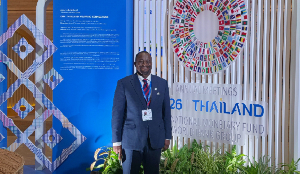
In a reflection on the 2026 International Monetary Fund (IMF) and World Bank Annual Meetings held in Bangkok, Thailand, Dr Acheampong said Ghana had also built reserves equivalent to about five months of import cover and was preparing to meet its 2027 and 2028 debt repayments through a sinking fund and other financing sources.
Dr Acheampong, who participated in panels and bilateral meetings during the week-long meetings as part of the Ghanaian delegation led by Finance Minister Dr Cassiel Ato Forson, said Ghana’s experience demonstrated the importance of preparing for economic crises before they occur.
“Ghana’s turnaround is real, and it was built on preparation,” he said in a post reflecting on the meetings.
He noted that public financial management reforms had placed commitment control at the centre of expenditure management, with government spending commitments expected to be backed by approved budget allocations and available cash.
The reforms also include hard fiscal rules, an Independent Fiscal Council and a Value for Money Office.
“Arrears were one of the back doors to the last crisis. Commitment authorisation has largely helped contain this,” Dr Acheampong stated.
AI could boost domestic revenue mobilisation
Dr Acheampong also highlighted the potential of artificial intelligence (AI) to improve tax administration and increase domestic revenue mobilisation across Africa.
He cited Ghana’s Publican AI-driven customs valuation system, which he said had increased assessed import values by more than US$300 million, representing a 17.5 per cent rise, without introducing new tax rates.
“Effective tax administration beats new taxes,” he stated, arguing that better enforcement and improved valuation systems could help governments generate more revenue without necessarily increasing tax rates.
He added that AI could provide African countries with an opportunity to expand their fiscal space.
“AI in tax administration could be one of the low hanging fruits to improve domestic revenue mobilisation and increase fiscal space on the continent,” he said.
Ghana must strengthen debt management
On sovereign debt, Dr Acheampong acknowledged the impact of Ghana’s 2022 debt restructuring on pensioners, banks and businesses.
He said the country had resolved not to repeat the experience, warning that future debt crises could arise not only from direct government borrowing but also from financial obligations elsewhere in the public sector.
“The next crisis for many countries may not come from central government borrowing but from other perimeters such as SOEs, take-or-pay power contracts, guarantees,” he said.
He argued that debt management must go beyond tracking loans to identifying and assessing risks wherever they arise within the public sector.
“Debt governance must move from counting loans to authorising and pricing risk wherever it sits,” Dr Acheampong stated.
He also called for greater transparency in sovereign debt restructuring, particularly in determining how different categories of creditors should be treated.
According to him, non-bond creditors are often treated as an afterthought in restructuring processes, making a transparent and rules-based approach necessary to help countries exit default and recover more quickly.
$10 billion New Economy Programme to drive industrialisation
Dr Acheampong further outlined Ghana’s New Economy Programme, which seeks to invest US$10 billion over five years in nine priority sectors.
The sectors include textiles and garments, agriculture and agribusiness, pharmaceuticals and tourism.
He said the programme would be financed through domestic resources rather than borrowing, as part of efforts to support industrialisation and green growth.
“Green investment becomes transformation only when the state also puts in skin in the game,” he said.
Dr Acheampong argued that governments must actively support productive sectors to ensure that investments in the green economy translate into industrial development, employment and broader economic benefits.
On international tax cooperation, Dr Acheampong said African countries were seeking a greater role in shaping global tax rules through negotiations on the United Nations Framework Convention on International Tax Cooperation.
He identified equitable taxing rights, taxation of the digital economy and the curbing of illicit financial flows as key priorities for the continent.
“Africa is negotiating as a rule-maker for the first time,” he said, highlighting the significance of the negotiations for the continent’s ability to influence international tax policy.
However, he stressed that international agreements would only deliver meaningful results if countries strengthened the capacity of their tax administrations and other state institutions to enforce the rules.
He said enhanced capacity building for state institutions was essential to ensuring that the continent benefited from international tax cooperation.
Lessons from Thailand for Ghana
Reflecting on Thailand’s economic development, Dr Acheampong said the country’s recovery following the 1997 Asian financial crisis offered important lessons for African economies.
He highlighted Thailand’s reserve accumulation, development of local-currency financial markets and sustained industrial policy as factors supporting its transformation into a modern economy with strong services and manufacturing sectors.
“Sequencing, macro stability first, and FDI tied to local suppliers are lessons Africa can take from the East Asian story,” he said.
𝗥𝗲𝗳𝗹𝗲𝗰𝘁𝗶𝗼𝗻𝘀 𝗳𝗿𝗼𝗺 𝗕𝗮𝗻𝗴𝗸𝗼𝗸: 𝘄𝗵𝗮𝘁 𝗚𝗵𝗮𝗻𝗮’𝘀 𝘁𝘂𝗿𝗻𝗮𝗿𝗼𝘂𝗻𝗱 𝘁𝗮𝘂𝗴𝗵𝘁 𝗺𝗲 𝗮𝘁 𝘁𝗵𝗲 𝟮𝟬𝟮𝟲 𝗜𝗠𝗙 𝗮𝗻𝗱 𝗪𝗼𝗿𝗹𝗱 𝗕𝗮𝗻𝗸 𝗔𝗻𝗻𝘂𝗮𝗹 𝗠𝗲𝗲𝘁𝗶𝗻𝗴𝘀
— Theo Acheampong, PhD (@mytheoz) October 22, 2026
Back from the 2026 IMF and World Bank Annual Meetings in Bangkok with the Ghana delegation led by Hon. Dr Cassiel Ato Forson. Below, I share some reflections from the various panels I participated in and a week of bilateral meetings.
𝟭. 𝗚𝗵𝗮𝗻𝗮’𝘀 𝘁𝘂𝗿𝗻𝗮𝗿𝗼𝘂𝗻𝗱, 𝗮𝗻𝗱 𝘁𝗵𝗲 𝗰𝗮𝘀𝗲 𝗳𝗼𝗿 𝗽𝗿𝗲𝗽𝗮𝗿𝗶𝗻𝗴 𝗯𝗲𝗳𝗼𝗿𝗲 𝘁𝗵𝗲 𝗰𝗿𝗶𝘀𝗶𝘀 Ghana’s turnaround is real, and it was built on preparation. Debt is down from over 80 per cent of GDP in 2022 to 45 per cent, inflation from above 50 per cent to under 6 per cent, reserves around five months of import cover. We rebuilt external buffers deliberately and are pre-funding the 2027 to 2028 repayments through a sinking fund and other sources. Internally, PFM reforms put commitment control at the centre: no commitment without an allotment and cash backing, hard fiscal rules, an Independent Fiscal Council and a Value for Money Office. Arrears were one of the back doors to the last crisis. Commitment authorisation has largely helped contain this.
𝟮. 𝗧𝗮𝘅 𝗿𝗲𝗳𝗼𝗿𝗺 𝗮𝗻𝗱 𝘁𝗵𝗲 𝗾𝘂𝗶𝗲𝘁 𝗿𝗲𝘃𝗼𝗹𝘂𝘁𝗶𝗼𝗻 𝗼𝗳 𝗔𝗜 𝗶𝗻 𝗮𝗱𝗺𝗶𝗻𝗶𝘀𝘁𝗿𝗮𝘁𝗶𝗼𝗻 Effective tax administration beats new taxes. Publican, our AI-driven customs valuation system, lifted assessed values by more than US$300 million, a 17.5 per cent increase, without a single new rate. AI in tax administration could be one of the low hanging fruits to improve domestic revenue mobilisation and increase fiscal space on the continent.
𝟯. 𝗦𝗼𝘃𝗲𝗿𝗲𝗶𝗴𝗻 𝗱𝗲𝗯𝘁 On sovereign debt, Ghana's 2022 restructuring was painful for pensioners, banks and businesses, and we have vowed never to repeat it. The next crisis for many countries may not come from central government borrowing but from other perimeters such as SOEs, take-or-pay power contracts, guarantees. Debt governance must move from counting loans to authorising and pricing risk wherever it sits. Second, the current resolution architecture still treats non-bond creditors as an afterthought in restructurings; comparability of treatment needs a transparent, rules-based test if countries are to exit defaults and recover faster.
𝟰. 𝗔𝗳𝗿𝗶𝗰𝗮’𝘀 𝗴𝗿𝗲𝗲𝗻 𝗴𝗿𝗼𝘄𝘁𝗵 𝗮𝗻𝗱 𝗶𝗻𝗱𝘂𝘀𝘁𝗿𝗶𝗮𝗹 𝗽𝗼𝗹𝗶𝗰𝘆 On green growth, most of the tension between development and transition is a constraint, not a trade-off. Green investment becomes transformation only when the state also puts in skin in the game. Ghana’s 𝗡𝗲𝘄 𝗘𝗰𝗼𝗻𝗼𝗺𝘆 𝗣𝗿𝗼𝗴𝗿𝗮𝗺𝗺𝗲 seeks to invest US$10 billion over five years in nine key sectors including textiles and garments, agriculture and agribusiness, pharmaceuticals, and tourism. The programme would be financed from domestic resources rather than borrowing.
𝟱. 𝗔𝗱𝘃𝗮𝗻𝗰𝗶𝗻𝗴 𝗔𝗳𝗿𝗶𝗰𝗮’𝘀 𝗽𝗿𝗶𝗼𝗿𝗶𝘁𝗶𝗲𝘀 𝗶𝗻 𝘁𝗵𝗲 𝗨𝗡 𝗙𝗿𝗮𝗺𝗲𝘄𝗼𝗿𝗸 𝗖𝗼𝗻𝘃𝗲𝗻𝘁𝗶𝗼𝗻 𝗼𝗻 𝗜𝗻𝘁𝗲𝗿𝗻𝗮𝘁𝗶𝗼𝗻𝗮𝗹 𝗧𝗮𝘅 𝗖𝗼𝗼𝗽𝗲𝗿𝗮𝘁𝗶𝗼𝗻 On the UN Framework Convention on International Tax Cooperation, Africa is negotiating as a rule-maker for the first time. Equitable taxing rights, the digital economy and illicit flows are the priorities. But a convention is only as strong as the administrations that enforce it - this is the point I made on need for enhanced capacity building of state institutions.
𝟲. 𝗕𝗮𝗻𝗴𝗸𝗼𝗸, 𝗮𝗻𝗱 𝘁𝗵𝗲 𝗘𝗮𝘀𝘁 𝗔𝘀𝗶𝗮𝗻 𝗺𝗶𝗿𝗿𝗼𝗿 Bangkok itself is the lesson. Thailand rebuilt after 1997 with reserves, local-currency markets and patient industrial policy, and is today a modern ASEAN economy with vibrant services and manufacturing. Sequencing, macro stability first, and FDI tied to local suppliers are lessons Africa can take from the East Asian story.
#IMFWBAnnualMeetings2026 #Ghana #PublicFinance #SovereignDebt #GreenGrowth #UNTaxConvention
ANAS/MA
Gold Now Makes Up Over 64% of Ghana’s Export Revenue – Sammy Gyamfi