Interior Minister Mubarak Mohammed Muntaka has called on ministers, Members of Parliament (MPs), Metropolitan, Municipal and District Chief Executives (MMDCEs) and other public officials to deliberately visit prisons across Ghana to witness the conditions under which inmates live and support efforts to rehabilitate them.
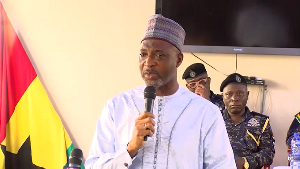
Speaking before Parliament’s Public Accounts Committee (PAC) on Tuesday, October 20, 2026, Muntaka said his visits to six prisons since assuming office had exposed him to challenges that, in his view, public officials needed to see for themselves before making decisions affecting the Ghana Prisons Service.
“I think we should have a programme where, deliberately, we all visit and see the kind of condition,” he told the committee, chaired by Abena Osei-Asare.
The minister’s appeal came during a session at which he and the Director-General of the Ghana Prisons Service, Mrs Patience Baffoe-Bonnie (Esq.), appeared before the committee to respond to infractions captured in the Attorney-General’s Report.
Muntaka said his experience had changed his understanding of the difficulties facing the service and called for a more deliberate approach to mobilising public support for prison operations and inmate rehabilitation.
“At least since, frankly speaking, until I became Minister, I had never visited any prison. But having been the Minister, I’ve visited six. And what I’ve seen, Madam Chair, what I’ve seen, I really wish that all of us who have the opportunity to serve in public service, Members of Parliament, DCEs, ministers, deputies, CEOs, I think we should have a programme where, deliberately, we all visit and see the kind of condition,” he said.
Muntaka calls for corporate support
Beyond prison visits, the Interior Minister urged public institutions and companies to channel more of their corporate social responsibility (CSR) resources towards prison rehabilitation.
He argued that organisations that spend substantial sums on CSR activities could support the Prisons Service through deliberate partnerships, helping to address funding gaps and improve conditions for inmates.
Muntaka cited spending on corporate social responsibility by institutions mentioned during the committee’s proceedings, including the GoldBod, as an example of the resources that could potentially be directed towards the rehabilitation agenda.
He also referred to the National Vaccine Institute’s reported expenditure of GH¢13.1 million on conferences and training, suggesting that a portion of such spending could be redirected towards prison-related interventions.
“A little can be switched for something this important,” he told the committee, urging public institutions and companies to work with the Prisons Service to support rehabilitation.
The minister said he had long believed that a fixed proportion of corporate social responsibility spending could be dedicated to prison rehabilitation, proposing that at least five percent of such expenditure be channelled into the initiative.
However, he acknowledged that securing corporate support remained a challenge, even though the service had written to companies and other institutions seeking assistance.
Muntaka said some progress had been made since he assumed office, including donations of about 20 pickup vehicles by individuals to support prison operations, as well as a bus donated by an institution.
He said the government was continuing efforts to draw attention to the service’s needs and encourage more individuals and organisations to contribute.
Funding gaps affect inmate rehabilitation
The committee’s proceedings also brought attention to funding constraints affecting the assessment and rehabilitation of inmates, particularly the processes surrounding their admission into and discharge from prison.
The Prisons Service explained that admission and discharge boards were necessary to assess inmates’ individual circumstances, identify special needs and determine the support required before they entered custody and when they returned to society.
At admission, the proposed assessment would consider factors such as physical disabilities, personal circumstances and other needs that could influence an inmate’s care and placement.
Before discharge, a similar process would assess the inmate’s experience in custody and identify the assistance needed to support reintegration into society.
However, the service said funding for these activities had been inadequate over the years, with no dedicated budget line previously available for the relevant processes.
It disclosed that GH¢1.5 million had been provided for training across the country’s 45 prisons, raising questions about how far the allocation could go when divided among the facilities.
The amount allocated for the admission and discharge board activities was also cited as a concern, with the service pointing to the need to involve social welfare officers and other relevant stakeholders.
The funding constraints, it explained, made it difficult to cover the allowances and other expenses associated with bringing the necessary professionals together to assess inmates and prepare them for life after prison.
The discussion underscored the importance of rehabilitation as part of the criminal justice system, rather than treating imprisonment solely as a means of punishment.
Call for a broader rehabilitation partnership
Muntaka also urged stakeholders to move beyond occasional donations and establish more structured arrangements to support the Prisons Service.
He said churches, religious groups, and a few individuals had contributed to prison-related activities but argued that the scale of the challenges required a broader commitment from the corporate sector and public institutions.
The minister further referred to an existing memorandum of understanding between the Ministry of the Interior and the Ministry of Education, which he said could support efforts to expand productive activities within the prison system.
He explained that the objective was not simply to have external organisations engage inmates in activities such as sewing uniforms, but to develop arrangements that would enable the service to undertake more of such work within its own facilities.
The proposed approach, he indicated, would help build the service’s capacity while supporting rehabilitation and productive skills development among inmates.
Muntaka’s remarks placed the spotlight on the need for sustained investment in Ghana’s prisons, stronger institutional partnerships, and greater public awareness of the conditions inmates face.
His central message was that public officials and corporate institutions should gain first-hand knowledge of those conditions and help develop practical, adequately funded interventions to improve prison operations and prepare inmates for their eventual return to society.
EA
General News of Tuesday, 20 October 2026
Source: www.ghanaweb.com
Six prison visits changed Muntaka’s mind; now he wants Ministers, MPs and DCEs to follow
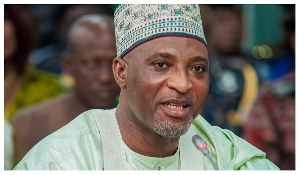 Mubarak Mohammed Muntaka, Minister of Interior