Ghana could potentially benefit from emergency financial support being considered by the World Bank for 30 to 40 countries facing energy shocks and rising prices linked to the war in the Middle East.
The World Bank is in discussions with the countries over possible assistance as higher fuel and fertiliser costs threaten to put additional pressure on developing economies.
Ghana is participating in this week’s Annual Meetings of the International Monetary Fund (IMF) and the World Bank Group in Bangkok, Thailand, where the economic impact of the conflict and financing needs of developing countries are expected to feature in discussions.
However, there is no indication that Ghana is among the countries currently in talks with the World Bank or that it has formally requested assistance.
World Bank President Ajay Banga disclosed the ongoing discussions in an interview with Reuters ahead of the meetings.
He pointed out that the global economy had remained relatively resilient, partly due to significant investments in artificial intelligence (AI) and adjustments in oil supply and demand.
As a result, few countries had sought assistance from the initial US$25 billion crisis fund the World Bank made available when the US-Iran war began in late February.
However, rising diesel and fertiliser prices, alongside other risks such as the possibility of a strong El Niño weather event, could increase pressure on developing economies.
“There is pressure, and so I think maybe over the coming months, more countries will come for some slice of that first $50 to $60 billion,” Banga said.
He was referring to the initial US$25 billion crisis fund and an additional US$35 billion that countries could access by redirecting funds from previously approved World Bank projects.
“We'll see, but we're ready. We're engaged. We're having conversations with a number of them, you know, 30 to 40 countries are in dialogue with us,” he added.
Many developing countries are grappling with higher energy costs and interest rates, which have increased borrowing costs and strained public finances already under pressure from spending during the COVID-19 pandemic and the inflation surge that followed Russia's invasion of Ukraine.
According to World Bank estimates, developing countries owe external creditors about US$400 billion in 2026, with interest payments accounting for roughly one-third of the total.
Banga said more countries had expressed interest in redirecting funds from existing projects than in accessing the Bank's immediate crisis financing facility to meet urgent cash needs.
He added that the World Bank could make up to US$100 billion available if conditions deteriorated further, exceeding the US$70 billion it disbursed during the COVID-19 pandemic.
Meanwhile, the World Bank is also seeking to mobilise more private investment to support development, particularly as Western countries reduce official bilateral aid.
Last month, the institution announced that it had mobilised a record US$112 billion in private capital in the year ended June 2026, up from US$69 billion a year earlier and more than three times the 2022 figure.
The amount was in addition to US$123 billion invested from the Bank's own resources during the same period, bringing total financing to US$235 billion, Banga said.
He stressed the need to use all available resources to address the growing financial challenges facing developing countries.
“There is no one answer that fits when the world has these kinds of issues. What you need to do is figure out how to cut your coat to suit your cloth,” Banga said.
Story by Mawuli Ahorlumegah, reporting from the 2026 IMF/World Bank Annual Meetings in Thailand, Bangkok [With additional files from Reuters]
Business News of Monday, 12 October 2026
Source: www.ghanaweb.com
World Bank considers emergency funding for 30-40 countries hit by energy shocks
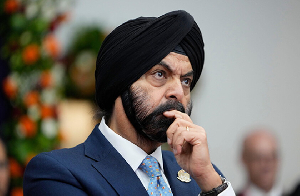 World Bank President Ajay Banga